
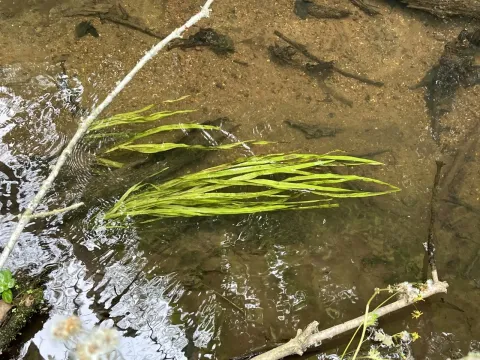
Neotropical eelgrass
Vallisneria neotropicalis
Neotropical eelgrass (Vallisneria neotropicalis) is a perennial submerged aquatic plant belonging to the Hydrocharitaceae family. It is widely recognized for its long, ribbon-like leaves that originate from a basal rosette and can reach significant lengths depending on the water depth and clarity.
What the section contains
Neotropical eelgrass
Originating from tropical regions of the Americas, this species is highly adapted to warm, freshwater environments. In a cultivation setting, it requires a stable water temperature, typically between 22 and 28 degrees Celsius, to maintain optimal metabolic activity and leaf production rates.
Regarding soil requirements, the plant thrives in substrates rich in organic matter and iron content. A fine-grained substrate is preferred to allow the delicate root system to anchor firmly and absorb necessary nutrients, which are essential for preventing leaf chlorosis and maintaining growth.
Light intensity plays a critical role in the development of Neotropical eelgrass. It requires moderate to high levels of full-spectrum light to perform photosynthesis efficiently, which is the primary driver of its rapid expansion and vegetative reproduction through stoloniferous runners.
Water quality parameters, such as pH and hardness, should be kept consistent. While the species is relatively adaptable, it is sensitive to chemical treatments, particularly copper-based algaecides, which can severely damage the plant's leaf tissues and inhibit further growth.
The primary economic use of Neotropical eelgrass is within the aquatic plant industry for aquarium hobbyists and pond management. It is highly valued for its ability to provide structural complexity, oxygenate water, and serve as a biological filter for excess nutrients.
Propagation is strictly vegetative, occurring through horizontal runners that spread across the substrate. In large-scale operations, these runners are cultivated in rows or specialized tanks to maximize the yield of daughter plants, which are harvested once they form independent root systems.
Harvesting involves carefully uprooting the established runners or using specialized tools to detach the daughter rosettes from the mother plant. Skillful handling is necessary to ensure that the fragile node tissues remain intact, as these are vital for the plant's successful re-establishment after planting.
Post-harvest procedures include thorough cleaning and quality inspection to ensure the absence of pests, such as snails or algae, which could compromise the health of the plants in a new environment. Only specimens with firm, vibrant green leaves are selected for commercial distribution.
For logistics and shipping, the plants are kept in high-humidity environments. Packing in breathable, moist-sealed plastic bags ensures that the plant remains hydrated while preventing rot, allowing for safe transport even over extended periods before the eelgrass reaches the end user.