
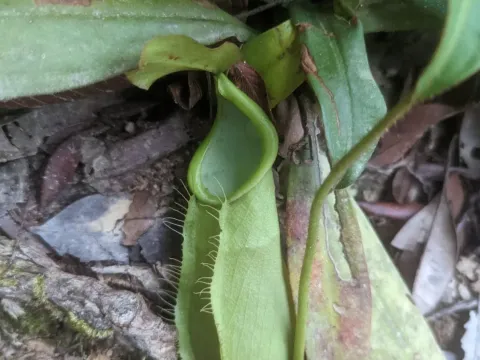
Nepenthes hispida
Nepenthes hispida
Nepenthes hispida is a rare tropical carnivorous plant belonging to the Nepenthaceae family. Native to the limestone outcrops of Borneo, it thrives in high-altitude environments with very specific ecological needs.
What the section contains
Nepenthes hispida
This species requires high ambient humidity, consistently staying between 70% and 90%. Proper air circulation is equally important to ensure the plant stays healthy and resists fungal growth.
The substrate must be highly porous and nutrient-poor. Growers typically utilize long-fiber sphagnum moss mixed with perlite or orchid bark to prevent the root system from becoming waterlogged.
Temperatures should mimic its natural highland or intermediate habitat, ideally ranging between 18°C at night and 26°C during the day to avoid heat stress and promote pitcher production.
Lighting should be bright but filtered. Using LED grow lights is a standard practice for many enthusiasts, allowing for precise control of the photoperiod and intensity required for vigorous growth.
Fungal pathogens such as Pythium and Phytophthora pose a significant risk if the substrate becomes stagnant. Proper drainage is essential to minimize the danger of root rot in home cultivation.
Mealybugs are one of the most common pests, often hiding in the crevices of the leaf axils or near the pitcher attachments, which can stunt the plant's growth significantly if left unchecked.
Aphids can also infest new, tender growth and developing pitchers, often distorting the plant's appearance and weakening the overall vigor of the individual specimen.
Environmental stress, especially low humidity combined with high temperatures, often leads to the drying out of pitchers and the browning of leaf tips, making the plant susceptible to secondary infections.
To maintain a healthy collection, it is vital to avoid over-fertilization, as even trace amounts of minerals can kill the sensitive root system and disrupt the plant's unique digestive capabilities.