
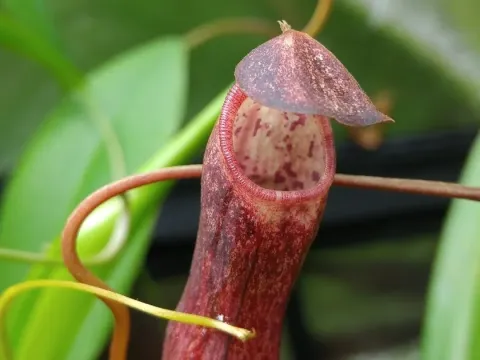
Nepenthes gracillima
Nepenthes gracillima
Nepenthes gracillima is a distinctive tropical carnivorous plant belonging to the Nepenthaceae family. It is native to the highland forest regions of Peninsular Malaysia, growing at elevations that necessitate specific environmental parameters for successful cultivation.
What the section contains
Nepenthes gracillima
The plant thrives in a highland-style environment. It requires daytime temperatures between 20°C and 25°C, and a distinct nocturnal drop to around 12°C–15°C. This temperature gradient is vital for maintaining the plant's health and vigorous pitcher production.
Humidity levels must remain consistently high, ideally ranging from 75% to 90%. Air movement is equally critical to prevent the buildup of stagnant air, which can promote fungal growth on the foliage and the pitchers themselves.
A nutrient-poor, acidic substrate is essential. Most growers utilize a mix of long-fiber sphagnum moss and perlite or pumice to ensure excellent aeration and drainage. The pH should be strictly maintained between 4.5 and 5.5 to mimic its natural environment.
Bright, filtered light is necessary for healthy development. While it requires high light intensity to produce its characteristic colorful pitchers, direct midday sun should be avoided to prevent thermal stress and leaf scorching in indoor setups.
Root rot is the most common threat, usually triggered by waterlogged substrate or water with high mineral content. Only distilled, reverse osmosis, or pure rainwater should be used, as tap water minerals can quickly accumulate and damage the sensitive root system.
Pest pressures include aphids and spider mites, which can become established during periods of low humidity. Monitoring the underside of the leaves and the developing pitchers is necessary, and any control measures must be gentle enough to avoid damaging the sensitive plant tissue.