
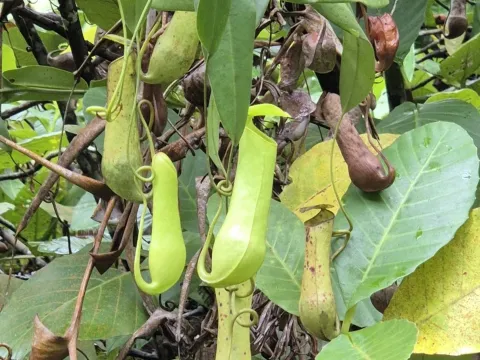
Nepenthes gracilis
Nepenthes gracilis
Nepenthes gracilis is a tropical carnivorous plant belonging to the family Nepenthaceae. It is native to the lowlands of Southeast Asia, where it thrives in humid jungle environments. This species is widely recognized for its slender pitchers, which trap insects to supplement nitrogen intake.
What the section contains
Nepenthes gracilis
The plant requires a high humidity level, ideally between 75% and 90%, to facilitate healthy pitcher development. Consistent temperatures between 22°C and 30°C are essential, as significant fluctuations can cause the plant to stop producing traps and enter a dormant or stressed state.
The growth medium must be nutrient-poor and acidic, with a pH ranging from 4.5 to 5.5. A mixture of long-fibered sphagnum moss and perlite is recommended to provide excellent aeration while retaining sufficient moisture without waterlogging the roots.
Optimal light exposure involves bright, filtered sunlight. Exposure to direct, intense light, especially in greenhouse environments, necessitates the use of shading cloths. In indoor setups, full-spectrum LED grow lights are effective for maintaining the plant’s vibrant coloration and vigor.
Watering protocols must strictly involve the use of distilled water, rainwater, or reverse osmosis water. The accumulation of minerals found in tap water will quickly damage the root system and cause the pitchers to brown and die prematurely due to salt toxicity.
Common pests affecting Nepenthes gracilis in confined environments include scale insects and mealybugs. These pests hide in leaf axils, making early detection critical. Manual removal using a cotton swab dipped in alcohol is often the safest intervention for smaller plants.
Bacterial and fungal infections, particularly Botrytis or root rot, frequently occur when air circulation is inadequate. Maintaining a gentle airflow around the plants and avoiding overhead watering during evening hours are essential practices to minimize the risk of pathogen spread.