
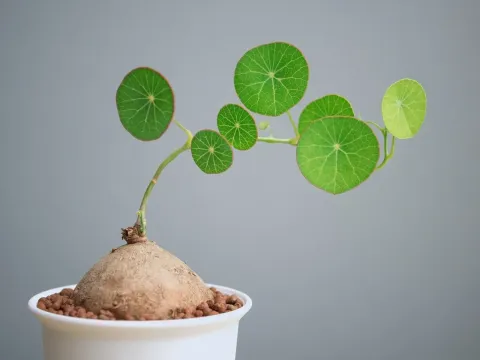
Stephania
Stephania
Stephania is a genus of flowering plants belonging to the Menispermaceae family, primarily known for its unique tuberous stems or caudexes. These plants are popular among collectors and enthusiasts for their sculptural appearance and slow-growing, perennial habit.
What the section contains
 Stephania abyssinica
Stephania abyssinica
Stephania abyssinica
 Stephania cephalantha
Stephania cephalantha
Stephania cephalantha
 Stephania delavayi
Stephania delavayi
Stephania delavayi
 Stephania elegans
Stephania elegans
Stephania elegans
 Stephania epigaea
Stephania epigaea
Stephania epigaea
 Stephania glandulifera
Stephania glandulifera
Stephania glandulifera
 Stephania gracilenta
Stephania gracilenta
Stephania gracilenta
 Stephania japonica
Stephania japonica
Stephania japonica
 Stephania pierrei
Stephania pierrei
Stephania pierrei
 Stephania suberosa
Stephania suberosa
Stephania suberosa
 Stephania venosa
Stephania venosa
Stephania venosa
Stephania
Originating from tropical and subtropical regions of Asia, specifically China, India, and Southeast Asia, Stephania species are adapted to diverse environments ranging from tropical forests to rocky slopes. This evolutionary background dictates their preference for filtered sunlight and stable temperatures.
Agricultural success depends on providing a highly porous, gritty substrate. Standard potting mixes must be amended with perlite, pumice, or gravel to ensure that water drains instantly. The caudex is highly susceptible to rot if it remains in contact with wet soil for extended periods.
The climate requirements include a warm, humid environment during the growing season. While they thrive in warmth, they are not frost-tolerant and must be protected from temperatures below 10-12 degrees Celsius to avoid irreversible cellular damage to the tuberous parts.
Management of the irrigation cycle is critical. During the dormant season, which typically occurs in winter, the plant drops its leaves, signaling that it requires almost zero water. Watering should resume gradually only when new shoot growth becomes visible in the spring.
The primary threat to Stephania is fungal and bacterial rot, usually caused by overwatering or poor ventilation. If the caudex loses its firm texture, it is often a sign of deep-seated infection, requiring drastic intervention or propagation from healthy cuttings if possible.
Common horticultural pests such as mealybugs and spider mites are frequent invaders, particularly when the plants are housed in indoor settings. Integrated pest management, involving proper sanitation and occasionally systemic insecticides, is necessary to keep the foliage clean and photosynthetic surface area intact.