
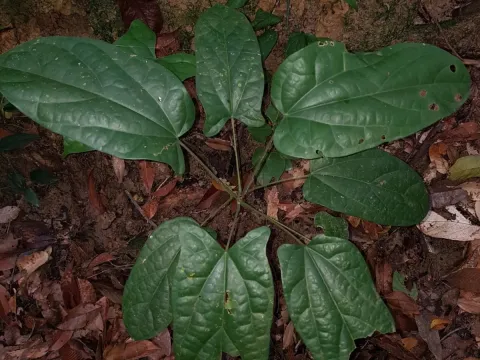
Tinomiscium
Tinomiscium
Tinomiscium is a genus of climbing plants within the Menispermaceae family, native to the tropical regions of Southeast Asia. Propagation is primarily achieved through seeds, which require specific moist conditions to successfully germinate.
What the section contains

Tinomiscium
Seeds should be sown in a well-draining, peat-based mix shortly after harvest to maintain their viability. Surface sowing or light covering is recommended to prevent suffocation of the embryos during the initial stages.
A consistent temperature range of 25°C to 30°C is essential to trigger the metabolic processes required for germination. Supplemental heat mats are often used to maintain these soil temperatures in cooler environments.
High humidity levels are non-negotiable for seedling development. Using humidity domes or intermittent misting systems helps to replicate the humid understory conditions of the plant's natural habitat.
After the seedling reaches the stage of having multiple true leaves, it should be transitioned to a slightly drier environment before final transplantation to ensure hardening of the stem tissues.
Cultivation of Tinomiscium requires careful management of light and temperature. The plant thrives in bright, indirect light, as direct sunlight can lead to leaf scorch and dehydration.
Soil requirements focus on high organic matter content combined with excellent drainage. A mix involving coconut coir, compost, and coarse sand provides the necessary aeration and moisture retention balance.
The humidity preference is consistently high, ideally ranging from 70% to 85%. Automated misting or localized humidifiers are highly effective in maintaining these levels during dry seasons.
Support structures, such as trellises or climbing ropes, are mandatory. As a vine, Tinomiscium utilizes these structures to reach higher light levels and optimize its photosynthetic surface area.
Water quality is also important; the plant prefers non-chlorinated water at ambient room temperature to avoid shocking the root system during the irrigation process.
While Tinomiscium is not a food crop in the traditional sense, its biomass yield is significant in tropical botanical and pharmacological studies. Growth rates depend heavily on the availability of nutrients.
Regular nitrogen-rich fertilization during the primary growing season can significantly increase vine length and leaf density. However, excessive feeding can lead to weak, succulent growth susceptible to pests.
Productivity in terms of secondary metabolites is influenced by environmental stress factors. Carefully controlled exposure to light can optimize the production of active compounds within the plant tissues.
Pruning is essential to maximize yield, as it redirects the plant's energy from redundant vegetative growth toward the development of thicker, healthier stems and root structures.
Total biomass harvesting must be balanced with the plant's recovery time. Sustainable harvesting practices ensure the longevity of the vine, allowing for multiple collection cycles over several years.
Pests represent a major challenge in Tinomiscium cultivation. Spider mites are particularly dangerous in dry conditions, as they feed on the underside of leaves, leading to chlorosis and potential plant death.
Scale insects are another common threat, attaching themselves to the stems and leaves, effectively draining the plant's resources. Manual removal and systemic treatments are standard mitigation strategies.
Root pathogens thrive in waterlogged soil conditions. Phytophthora and Pythium are common threats that necessitate strict irrigation schedules and the use of well-aerated, pathogen-free growing substrates.
Foliar diseases, such as fungal leaf spots, spread rapidly in crowded environments. Maintaining proper plant spacing and ensuring sufficient airflow between leaves are critical preventive measures.
If viral symptoms appear, such as mosaic patterns or stunting, affected plants must be immediately quarantined or destroyed to prevent the widespread transmission to healthy specimens.