
Stephania pierrei
Stephania pierrei
Description
Growing requirements
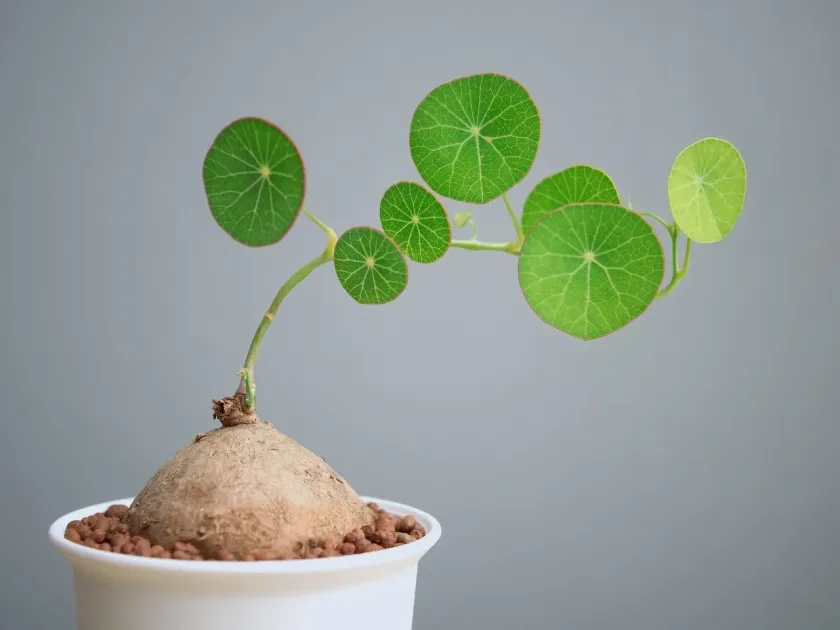
Stephania pierrei is a fascinating caudex-forming plant belonging to the Menispermaceae family. Its most distinctive feature is its enlarged, woody stem base, known as a caudex, which stores water and energy, allowing the plant to survive in its native tropical habitat.
Proper lighting is essential for healthy development. This species prefers bright, filtered sunlight. Exposure to harsh, direct sunlight during the middle of the day can cause leaf scorch, while insufficient light leads to long, spindly growth.
The substrate must be highly permeable to ensure proper drainage. A typical mix should include mineral components like pumice, perlite, and coarse sand, combined with a small amount of organic potting soil to prevent water stagnation around the caudex.
Watering requires a careful balance. During the active growing season, water thoroughly only when the soil has dried out completely. As the plant transitions into dormancy and drops its leaves, watering should be significantly reduced or stopped entirely.
Temperature management plays a vital role in its life cycle. It thrives in warm environments, ideally between 20°C and 25°C. During the winter dormancy period, the plant prefers cooler temperatures to rest properly before the next growth cycle begins.
Main diseases and pests
Root and caudex rot caused by overwatering is the primary threat to the longevity of Stephania pierrei. If the plant remains in soggy, poorly drained soil, the base can quickly turn soft and mushy, often leading to irreversible damage.
Spider mites are common pests in indoor environments, especially when the air is dry. They suck the sap from the leaves, causing stippling and discolouration. Increasing air circulation or using a mild miticide can help control these pests effectively.
Mealybugs are another common challenge, as they often hide in the crevices of the caudex and leaf joints. Their presence is indicated by a white, cottony substance, which should be treated immediately with an appropriate insecticide.
Thrips can cause significant damage to young leaves, manifesting as twisted, stunted, or silvery foliage. Regular inspection of the undersides of leaves is necessary to catch infestations early and apply corrective measures.
Fungal leaf spot diseases can occur if the plant is kept in conditions with poor airflow and high humidity. Providing adequate space between plants and avoiding water accumulation on the leaves is a standard preventive practice for this species.