
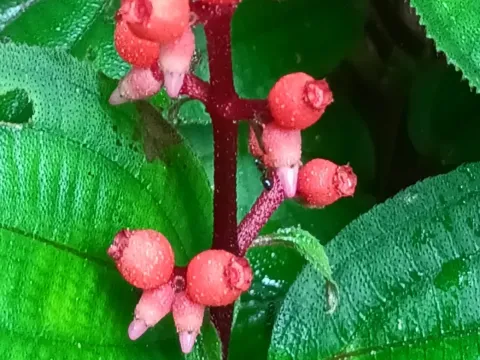
Miconia ceramicarpa
Miconia ceramicarpa
Miconia ceramicarpa is an evergreen shrub species belonging to the Melastomataceae family. It is native to the tropical forests of Central and South America, where it thrives in shaded understory environments.
What the section contains
Miconia ceramicarpa
The plant requires a high-humidity environment with stable temperatures between 22 and 28 degrees Celsius. Protection from direct sunlight and harsh winds is essential for maintaining healthy foliage.
Ideal soil conditions include well-drained, acidic, and organic-rich substrates. The root system is sensitive to waterlogging, necessitating excellent drainage in both pots and garden beds.
Watering frequency should be adjusted based on the substrate moisture level. Miconia prefers consistently moist soil but requires a drying period between watering cycles to prevent root rot.
Nutritional needs are best met with slow-release organic fertilizers applied during the active growth phase. Over-fertilization should be avoided to prevent salt accumulation in the root zone.
Fungal pathogens are the most common threat to this species, particularly under conditions of poor air circulation and excessive humidity. Leaf spot diseases can spread rapidly if not managed.
Pests such as spider mites, mealybugs, and aphids represent a consistent threat in greenhouse environments. These insects thrive on the tender young growth typical of this shrub.
Root rot caused by Oomycetes or various fungi occurs when drainage is insufficient. This is often the primary cause of plant loss in non-native horticultural settings.
Nutrient deficiencies, specifically iron or magnesium, may manifest as interveinal chlorosis. Regular soil testing helps maintain the specific micronutrient balance required by the plant.
Mechanical damage to the delicate stems can provide entry points for secondary infections. Careful handling during pruning and maintenance is necessary to keep the plant vigorous.