
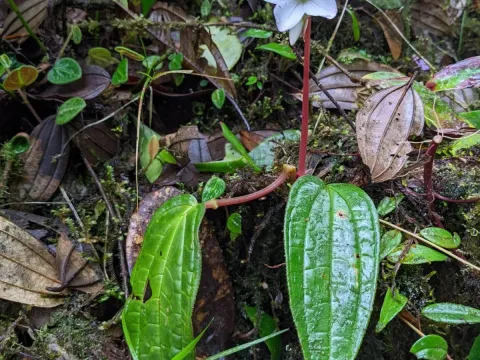
Monolena
Monolena Triana
Monolena (Monolena Triana) is a genus of herbaceous plants classified within the Melastomataceae family. These plants are native to the tropical rainforests of Central and South America, typically thriving on the forest floor under a dense canopy.
What the section contains

Monolena
The climate requirements for Monolena are specific, demanding high humidity levels and constant temperatures between 18°C and 25°C. As a tropical plant, it is not frost-tolerant and requires controlled indoor environments for long-term survival.
Soil composition must be rich in organic matter and highly porous. A mixture consisting of peat moss, perlite, and shredded bark is recommended to mimic the natural environment of the forest floor, ensuring effective aeration of the roots.
Regarding light, Monolena prefers bright, filtered sunlight or partial shade. Direct exposure to intense solar radiation can easily scorch its delicate foliage, causing significant physiological stress and reduced growth rates.
Watering should be conducted with room-temperature water. Maintaining a moist, but not waterlogged, medium is vital. High atmospheric humidity is just as important as soil moisture, often requiring the use of humidifiers in drier climates.
Spider mites are the most common pests that affect Monolena, especially in environments where the air is dry. Early detection through regular leaf inspections is necessary to prevent severe infestations.
Root rot is the primary threat to this plant, usually caused by overwatering or poor drainage systems in the pot. It is essential to ensure that excess water can drain freely to maintain root health.
Mealybugs can occasionally infest the plant, settling in the leaf junctions. These pests extract sap from the plant and can be managed with systemic insecticides or gentle manual removal depending on the scale of the issue.
Fungal leaf spot diseases may appear if the foliage stays wet for prolonged periods without adequate airflow. Keeping the leaves dry and ensuring good ventilation around the plant are critical preventative measures.
Nutritional deficiencies can manifest as chlorosis on the leaves. Using a balanced, diluted liquid fertilizer during the active growing season helps prevent such imbalances and keeps the foliage vibrant and healthy.