
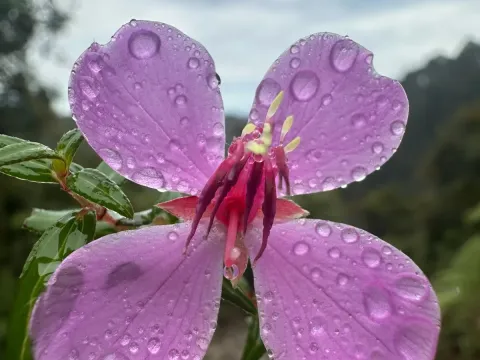
Monochaetum
Monochaetum
Monochaetum is a genus of evergreen shrubs belonging to the Melastomataceae family. These plants are native to high-altitude regions in Central and South America, particularly in cloud forest ecosystems.
What the section contains


Monochaetum
Cultivation requires a stable, moderate climate. Monochaetum plants thrive in temperatures between 18°C and 24°C and are sensitive to frost, which can cause severe damage or death to the plant tissue.
The ideal soil for Monochaetum is rich in organic matter, well-draining, and slightly acidic. Good aeration is essential to allow the root system to breathe and prevent compaction.
Light requirements are specific: they need bright, indirect sunlight. Exposure to harsh midday sun can scorch the leaves, so positioning the plants in a shaded or semi-shaded area is highly recommended.
Maintaining high humidity levels is crucial for this genus. Frequent misting, humidity trays, or a greenhouse environment help mimic their natural habitat and prevent the edges of the leaves from drying out.
Common pests affecting Monochaetum include spider mites, which thrive in low-humidity environments and can rapidly infest the undersides of the leaves.
Mealybugs are another frequent threat, often congregating in leaf axils where they feed on sap, weakening the plant and causing stunted growth or yellowing.
Fungal issues, such as root rot, often occur due to poor drainage or overly frequent irrigation, especially during dormant periods when the plant's metabolic activity slows down.
Powdery mildew can affect the foliage if there is poor air circulation, particularly in greenhouses or interior spaces where stagnant air promotes spore germination.
Effective management strategies involve regular monitoring, keeping the foliage clean, and ensuring optimal environmental conditions to discourage pests and pathogens from establishing.