
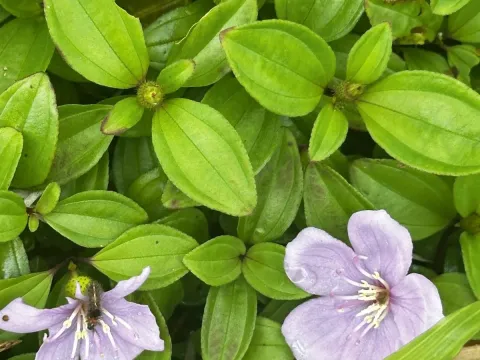
Melastoma dodecandrum
Melastoma dodecandrum
Melastoma dodecandrum belongs to the Melastomataceae family, which is widely recognized for its ornamental and medicinal species. This evergreen shrub is native to the tropical regions of Southeast Asia, where it thrives in warm and humid environments.
What the section contains
Melastoma dodecandrum
The plant requires acidic, well-draining soil rich in organic matter to support healthy growth. Proper soil preparation involves incorporating peat or compost to maintain the necessary pH levels, which are crucial for this species' development.
Regarding climate, Melastoma dodecandrum is highly sensitive to cold and requires stable temperatures, ideally between 20°C and 28°C. It is typically grown in greenhouses or botanical conservatory settings in non-tropical regions to ensure survival.
Light management is essential for successful cultivation. The species performs best in bright, indirect light. Direct exposure to intense midday sun can result in leaf scorching and dehydration, so greenhouse shading is often necessary.
Watering practices must be meticulous; the plant prefers consistent moisture but cannot tolerate waterlogging. Using demineralized or rainwater is highly recommended, as municipal water often contains lime that can negatively affect soil acidity over time.
The harvest of Melastoma dodecandrum primarily focuses on its edible fruits and foliage, which are utilized in traditional medicine. The fruits are known for their distinct taste and nutritional composition, requiring careful handling during collection.
Fruit harvesting should be performed when the berries are fully mature and soft to the touch. Due to their delicate nature, picking them manually is the preferred method to prevent bruising and loss of juice quality.
Foliage harvesting is conducted throughout the growing season for medicinal purposes. Only mature, healthy leaves should be selected, ensuring the structural integrity of the main stems remains intact for continued growth.
Post-harvest processing involves cleaning and drying the plant material. Proper ventilation is required during the drying process to prevent mold growth, especially in humid conditions where the plant is typically grown.
After the harvest is complete, performing a pruning session helps maintain plant vigor. Pruning encourages the development of new, productive stems and prevents the plant from becoming leggy, ensuring better yields in subsequent seasons.