
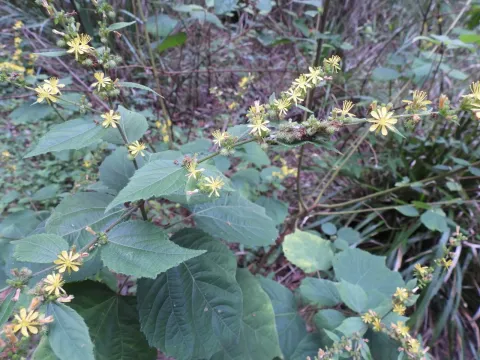
Triumfetta rhomboidea
Triumfetta rhomboidea
Triumfetta rhomboidea, commonly known as diamond burbark, is an annual or perennial shrub belonging to the Malvaceae family. Historically valued for its fibrous bark, this plant is cultivated in various tropical regions as a source of high-quality natural bast fiber.
What the section contains
Triumfetta rhomboidea
The sowing process is typically timed to coincide with the onset of the rainy season. This alignment is crucial, as it provides the necessary soil moisture levels to ensure rapid germination and establish a uniform stand of plants without the need for irrigation.
Seeds are sown in well-prepared, loose soil beds. Maintaining the correct planting depth is vital for uniform emergence, while the planting density is carefully managed to encourage the development of tall, straight stems, which are essential for high-yield fiber production.
In the early stages of growth, the crop requires careful management to minimize competition from weeds. Since the plant is relatively fast-growing, it typically establishes a canopy that suppresses weed development effectively after the first few weeks.
The biological characteristics of the plant allow it to adapt to diverse tropical environments. Its ability to grow rapidly ensures that the crop cycle remains short, facilitating multiple harvests in regions where climate conditions permit year-round vegetation.
This species thrives in sunny, open locations with adequate drainage. It is highly intolerant of waterlogging, which can lead to root system decay, making well-drained alluvial or sandy-loam soils the preferred choice for commercial cultivation.
The plant demonstrates good adaptability regarding soil fertility, though it responds positively to organic amendments. Maintaining a neutral or slightly acidic pH range is generally optimal for maximizing biomass production and fiber quality.
Temperature requirements are strictly tropical, with the ideal range falling between 20°C and 30°C. Cold temperatures and frost are detrimental to the crop, severely hindering its growth rate and potentially leading to the death of young seedlings.
Consistent rainfall is necessary for the production of high-quality fiber. While the plant possesses some degree of drought tolerance, periodic moisture stress can lead to the formation of brittle fibers, which significantly diminishes the economic value of the harvest.
Spacing between plants must be optimized to balance stem thickness and structural integrity. Denser spacing helps prevent excessive lateral branching, promoting the growth of long, clean, and flexible fibers that are ideal for textile and cordage applications.
The yield of Triumfetta rhomboidea is primarily measured by the weight of dry fiber extracted per hectare. Through intensive management, including proper thinning and nutrient application, growers can achieve competitive yields similar to other traditional bast fiber crops.
Harvesting efficiency is a critical factor in determining total yield. By capturing the stems at their peak physiological state, producers ensure that the bark layer is fully developed and easy to separate from the woody core, thus maximizing the final output.
Beyond its fiber, the plant provides significant organic matter. Post-harvest residues serve as effective green manure, returning essential nutrients and carbon to the soil, which helps maintain field fertility for subsequent crop rotations.
The extraction process involves retting, where stems are submerged in water. The efficiency of this process, influenced by water temperature and the microbial activity in the water, directly impacts the quality and the final recoverable yield of the fiber strands.
Market demand for natural, biodegradable materials continues to support the interest in this crop. Accurate estimation of harvest timing remains the most effective tool for growers to maintain high yields and ensure product quality standards are met.
Fungal pathogens represent a significant threat to the crop, particularly in high-humidity environments. These pathogens can cause stem lesions and root rot, which significantly degrade the quality of the fiber if not managed through proper field sanitation.
Insect pests that target foliage and young shoots can also impede plant growth. Integrated pest management, focusing on biological controls and crop rotation, is essential to minimize damage and reduce the need for synthetic chemical applications.
Storage of the harvested raw material is a major challenge due to the risk of mold growth. Ensuring that fiber is thoroughly dried before bundling is crucial to prevent degradation and loss of color or tensile strength during transport and storage.
Regular field scouting is recommended to identify early signs of nutrient deficiencies or pest outbreaks. By responding promptly to these threats, farmers can prevent localized issues from spreading throughout the entire plantation.
Environmental stressors, such as extreme winds, can sometimes lead to lodging. While the plant is generally sturdy, maintaining optimal plant density helps stabilize the crop and protects the integrity of the stems until the time of harvest.
The harvest period is strictly determined by the phenological stage of the plant, specifically at the commencement of flowering. Harvesting at this stage ensures that the plant has reached maximum biomass without significant lignification of the fibers.
The stems are harvested by cutting at the base, followed by immediate stripping of leaves. Mechanized harvesting equipment can be employed if the machinery is correctly adjusted to prevent bruising the bark, which preserves the fiber quality.
Once harvested, the stems are bundled and subjected to the retting process. This step is delicate, as it requires careful monitoring to ensure that the bark softens adequately without the fibers becoming over-processed or weakened by decay.
After successful extraction, the fibers are washed and sun-dried. Drying is an essential quality control step that locks in the properties of the fiber and prepares it for grading, sorting, and eventual baling for industrial distribution.
Grading is the final step, where fibers are sorted based on length, color, and tensile strength. This sorting ensures that the final product meets the specifications of manufacturers who utilize the fiber for rope-making, weaving, or packaging materials.