
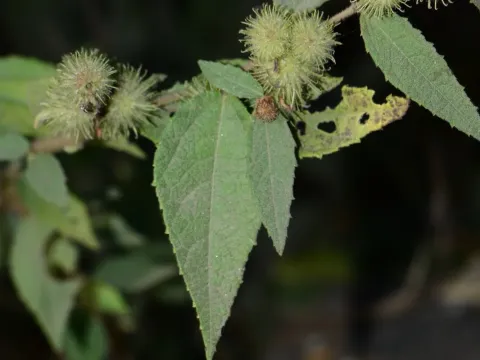
Triumfetta pilosa
Triumfetta pilosa
Triumfetta pilosa is a perennial herbaceous plant belonging to the Malvaceae family. It is primarily recognized as a source of high-quality bast fiber, utilized in various industrial applications due to its durability and flexibility.
What the section contains
Triumfetta pilosa
The seeds of this plant possess a hard coat, necessitating scarification or pre-soaking to improve germination rates. Planting should ideally occur when soil temperatures stabilize between 18 and 22 degrees Celsius.
Uniform spacing is crucial for fiber production, as it encourages the development of long, straight, and branch-free stems. Sowing is typically conducted in rows with intervals ranging from 30 to 45 centimeters.
Adequate soil moisture is vital during the early seedling stage. If rainfall is insufficient, irrigation must be provided to ensure consistent growth and prevent stunted development of the primary stem.
Young plants are susceptible to weed competition during their initial growth phase. Farmers should implement mechanical cultivation to keep rows clear until the crop achieves sufficient height to outcompete weeds.
This species thrives in sunny environments, requiring maximum exposure to light to facilitate optimal biomass accumulation. It is well-adapted to tropical and subtropical climates where heat is consistent throughout the year.
Fertile, well-drained loam or alluvial soils are preferred for the successful cultivation of Triumfetta pilosa. The plant cannot tolerate waterlogging, which often leads to root rot and severe physiological stress.
While the plant exhibits moderate drought resistance, consistent water availability is necessary to achieve high fiber yield. Soils should ideally maintain a pH range of 6.0 to 7.5 for maximum nutrient uptake.
Organic matter enrichment, such as compost or mulch, improves soil structure and nutrient retention. A balanced fertilizer application, focusing on nitrogen during early growth, significantly boosts fiber development.
Growth slows down significantly when temperatures drop below 15 degrees Celsius. Therefore, the selection of planting sites must account for frost-free periods and thermal requirements of the species.
The primary economic value of Triumfetta pilosa lies in its stem fibers. These fibers are extracted through the retting process, where stems are immersed in water to facilitate the breakdown of pectin holding the fiber bundles.
Total green biomass yields can be substantial under optimal management. Producers focus on maximizing stem length, which directly correlates to the final weight and commercial value of the harvested fiber.
In addition to industrial fibers, the plant’s biomass can serve as organic material for land rehabilitation or as a component in sustainable packaging manufacturing, highlighting its versatility.
Fiber quality is strictly dependent on the timing of the harvest. If harvested too early, the fiber is weak; if harvested too late, the stems become woody, making the extraction process difficult and fiber quality coarse.
Seed harvesting should be performed when seed pods turn brown. Proper handling and storage of seeds are essential to ensure high viability for subsequent planting seasons.
Leaf-eating insects can cause significant damage during the vegetative stage. Integrated pest management, focusing on biological controls, is recommended to protect the crop without compromising fiber quality.
Fungal pathogens typically arise due to poor field drainage or high humidity during the rainy season. Ensuring adequate air circulation between plants is a primary preventative measure.
Aphids and mites are occasional threats that can stunt growth if left untreated. Regular monitoring of the field allows for early intervention, minimizing the need for extensive chemical applications.
Weed management remains the most challenging aspect in the early growth stages. Manual or mechanical hoeing is necessary to prevent invasive plants from draining soil nutrients away from the crop.
Rodents may target fields located near wild habitats. Protecting the perimeter and maintaining clean field borders help mitigate the risks associated with local wildlife infestations.
Harvesting is performed at the peak of the flowering stage, ensuring the best balance between fiber quantity and structural integrity. The stems are cut near the base to maximize yield.
Post-harvest, stems are bundled and transported to retting tanks. The duration of retting depends on ambient water temperature, typically requiring 7 to 14 days for complete decomposition of unwanted tissues.
Once retting is achieved, fibers are carefully stripped, washed, and dried. Clean water sources are essential during this stage to prevent contamination of the fibers by impurities or discoloring agents.
Drying must be conducted in shaded, well-ventilated areas. Exposing the damp fibers to intense, direct sunlight can lead to embrittlement, reducing their tensile strength and market value.
Processed fibers should be stored in a dry, cool environment to prevent microbial growth. Proper packaging is important to maintain fiber quality during transport to textile manufacturing facilities.