
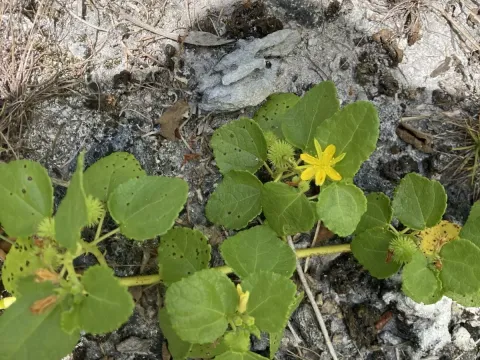
Triumfetta procumbens
Triumfetta procumbens
Triumfetta procumbens is a tropical species, and its sowing schedule is primarily dictated by the onset of the rainy season. In natural habitats, seeds are sown directly into the soil when moisture levels are sufficient to trigger germination and provide consistent hydration.
What the section contains
Triumfetta procumbens
Under controlled conditions, preparing the seedbed is essential. Seeds should be planted at a shallow depth of 1–2 centimeters, as they require soil warmth and proximity to the surface to break dormancy effectively.
Proper spacing between rows is critical to ensure airflow and reduce competition for light and nutrients. A minimum distance of 40–50 centimeters is recommended to allow the plant to spread its creeping stems without overcrowding.
The germination period requires a stable environment with temperatures between 22 and 25 degrees Celsius. Over-watering must be avoided to prevent seed rot, which is a common issue in overly saturated tropical soils.
In temperate zones, cultivation is only feasible in greenhouses where light and thermal conditions can be strictly managed to mimic the plant's native tropical climate.
Belonging to the Malvaceae family, Triumfetta procumbens is a prostrate shrub well-adapted to coastal and sandy habitats. Its creeping growth habit makes it an excellent plant for soil stabilization and erosion control in tropical environments.
The species prefers well-drained, sandy or light loamy soils with a neutral to slightly alkaline pH. It exhibits notable salt tolerance, which allows it to thrive in regions where other crops might struggle due to high soil salinity.
Regarding climate, the plant requires frost-free conditions and high light intensity. It is highly sensitive to cold and thrives best in environments with high relative humidity and consistent warmth throughout the year.
Agronomic management includes the application of organic fertilizers during the early growth phase to support root development. Moderate nitrogen levels are encouraged to promote biomass growth while maintaining the structural integrity of the plant's fibers.
The plant is naturally resistant to wind due to its low-growing structure, but young seedlings may benefit from temporary protection against mechanical damage caused by strong tropical winds.
The yield of Triumfetta procumbens is determined by the quantity of harvestable biomass and the quality of the fiber extracted from its stems. As a perennial-like shrub, it offers the advantage of multiple harvests within a single growing season.
Optimal yield is achieved through regular pruning, which encourages the plant to produce new, vigorous shoots. Harvesting should be timed before the stems become overly lignified to ensure the fiber remains soft and pliable.
The biomass productivity is significantly influenced by light exposure and soil fertility. On average, well-maintained crops can yield between 5 to 8 tons of green matter per hectare annually, depending on the intensity of the management.
Fiber content represents roughly 10–15% of the dry matter. The processing requires retting to extract the usable fiber, a process common for fiber-producing members of the Malvaceae family.
The efficiency of the harvest is improved through mechanized cutting, which allows for uniform regrowth and consistent fiber quality across the entire plantation area.
Fungal diseases, such as root rot and powdery mildew, represent the primary threat, particularly in environments with poor air circulation or excessive soil moisture. Maintaining adequate spacing is a key preventative strategy.
Pests, including aphids and various leaf-eating insects, can colonize young shoots and foliage. Integrated pest management, focusing on biological controls or targeted applications, is recommended to mitigate these risks.
Nematodes are a significant concern in sandy soils where the plant frequently grows. Rotating crops or incorporating cover crops that are not host plants can help manage nematode populations effectively.
Viral infections transmitted by insect vectors can cause leaf distortion and growth stunting. Prompt removal and destruction of infected plants are necessary to contain potential outbreaks in the field.
Weed competition during the early establishment phase is a major factor that can suppress crop growth, making regular manual or mechanical weeding an essential agronomic practice.
Harvesting is performed by selectively cutting the stems that have reached the desired length and flexibility. Care must be taken to leave the root crown intact to allow for subsequent regrowth of the shoots.
Early morning harvests are preferred to ensure the stems contain maximum hydration, which facilitates cleaner cutting and better processing results. Post-harvest, the raw material should be sorted immediately to separate leaves from stems.
The extraction of fiber involves retting, where stems are submerged in water to allow natural degradation of pectin compounds. This process must be carefully monitored to avoid over-retting, which could compromise fiber strength.
Drying the extracted fibers should be done in a shaded, well-ventilated area. Direct sunlight exposure can make the fibers brittle and lower their market value significantly.
Proper storage in a dry environment is crucial to prevent fungal growth and maintain the quality of the fibers for long-term storage or processing into finished products.