
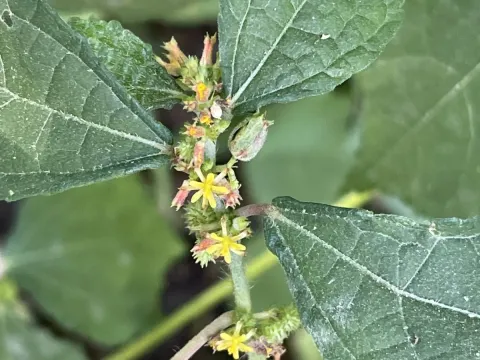
Triumfetta pentandra
Triumfetta pentandra
Sowing of Triumfetta pentandra should take place when the soil temperature has stabilized, typically requiring at least 18–20°C to ensure uniform germination.
What the section contains
Triumfetta pentandra
Seeds are sown at a shallow depth of 1–2 cm, which is crucial for optimal moisture uptake and successful establishment of the seedlings in the initial stages.
Wide-row spacing of 40–50 cm is recommended to facilitate proper weed management and mechanical cultivation during the early growth period of the crop.
In tropical regions, the optimal planting window coincides with the onset of the rainy season, providing sufficient moisture for rapid biomass development.
Seed density must be carefully calculated to achieve the ideal plant stand, ensuring both high fiber quality and efficient use of soil nutrients.
As a member of the Malvaceae family, Triumfetta pentandra thrives in warm, tropical climates and requires plenty of direct sunlight to reach its full potential.
The crop prefers well-drained, fertile loam soils with a neutral to slightly acidic pH, avoiding areas prone to waterlogging to protect the root system.
While the plant shows some resistance to moderate dry spells, consistent irrigation is necessary for the production of high-quality, long-staple bast fibers.
Protecting the fields from strong winds is essential to prevent stem lodging, which can significantly reduce the marketable quality of the fibrous material.
The application of balanced fertilizers during the active vegetative growth phase is highly beneficial for increasing the biomass yield per hectare.
The yield of Triumfetta pentandra is significantly influenced by early-stage agronomic management and maintaining the correct density of the plant stand.
The primary agricultural interest in this species lies in its bast fiber, which is known for its durability and suitability for various industrial applications.
Beyond fiber extraction, the crop generates a significant amount of residual biomass that can be repurposed for sustainable pulp or organic fertilizer production.
Maximizing yield depends on a weed-free field during the early stages of growth and ensuring adequate moisture levels throughout the development cycle.
Advanced processing technologies allow for high-efficiency extraction, making the cultivation of this fiber crop a viable economic proposition for specialized agriculture.
Fungal diseases affecting the root system represent a significant threat to the crop, especially in environments with poor soil drainage and high humidity.
Pests typical of the Malvaceae family, including aphids and various beetles, can cause extensive damage to leaves and stems if not controlled early.
Soil-borne nematodes can lead to reduced plant vigor, necessitating strict crop rotation schedules to maintain long-term soil health and yield stability.
Integrated pest management, combining biological controls and crop hygiene, is recommended to mitigate the impact of threats without compromising fiber quality.
Timely weed control in the first few weeks is crucial, as the crop is vulnerable to competition from invasive plants during its initial growth phase.
Harvesting should be performed during the peak flowering stage to ensure the best balance between fiber strength, flexibility, and overall fiber content.
Mechanical harvesting equipment is used to cut the stems, followed by immediate processing or bundling to prevent the start of premature fermentation.
The stems undergo a retting process—either in water or through dew retting—to separate the high-quality fiber from the woody core of the plant.
Proper drying of the extracted fiber is essential to maintain color quality and prevent the development of mold, which could diminish the commercial value.
Harvest timing is critical; delaying the process leads to lignification of the stems, resulting in coarser, lower-grade fibers that are difficult to process.