
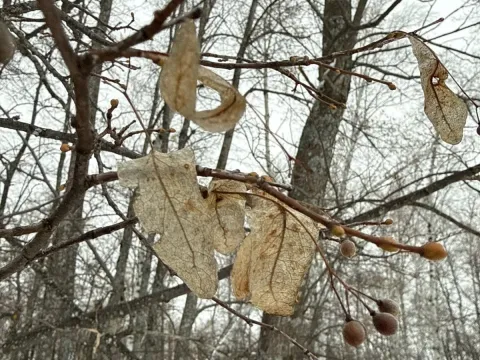
Lime tree
Tilia L.
Sowing linden seeds in nurseries is typically performed in autumn immediately after collection, which allows for natural stratification of the seed material in the soil during winter.
What the section contains


Lime tree
When sowing in spring, seeds require mandatory preliminary stratification at temperatures between 0 and +5 degrees Celsius for 3–5 months to increase germination rates.
The sowing depth is 2–3 centimeters in light soils and up to 1.5 centimeters in heavier soils to allow the sprouts to emerge easily through the surface layer.
Using freshly harvested seeds is recommended to accelerate germination, as their viability decreases rapidly under dry storage conditions due to the structure of the seed coat.
Seedling propagation can also be achieved through cuttings or layering; however, the seed method remains the primary choice for establishing forestry plantations and large-scale sites.
The lime tree is a woody species of the Malvaceae family, known for its high requirements regarding soil fertility and moisture levels for optimal growth.
The best development is observed in deep, well-drained loams rich in humus and calcium, although the species is highly sensitive to soil salinity.
In terms of light, the lime tree is a shade-tolerant species, which allows it to thrive in the forest understory, although open spaces are required for abundant flowering.
The culture exhibits good frost resistance, but young trees may suffer from late spring frosts that damage tender buds and young shoots.
Optimal climatic conditions for cultivating lime trees include a moderately warm and humid climate, ensuring stable biomass accumulation and the formation of full inflorescences.
The economic value of the lime tree lies primarily in its role as a powerful honey plant, capable of producing up to 1000 kg of high-quality honey per hectare.
Linden wood is valued in the industry for its softness and uniform structure; it is highly resistant to warping and easy to process mechanically, which is essential for carving.
Linden flowers are actively harvested as valuable medicinal raw material containing flavonoids and essential oils used in the pharmaceutical and cosmetic sectors.
In landscape design, lime trees are used to create hedges and avenues, as they tolerate pruning very well and maintain their shaped canopy for a long time.
The productivity of linden stands depends on the age of the trees: the peak of honey production and flowering occurs between 20 and 40 years of age.
One of the most dangerous pests is the linden leaf miner, whose larvae tunnel through the leaves, causing premature yellowing and leaf fall.
Significant damage can be caused by various types of scale insects, which feed on the sap of young shoots and reduce the overall vitality of the tree.
Fungal diseases, such as leaf spot and rust, develop during periods of high humidity and when plantings are too dense, hindering proper air circulation within the crown.
If trunks are damaged by rodents or mechanical impact, wood rot may develop, leading to the weakening and eventual drying out of the tree.
Preventive measures include sanitary pruning of infected branches, timely pest control, and maintaining optimal planting density in parks and gardens.
Harvesting of linden inflorescences is conducted during the period of mass flowering, when most flowers have opened but have not yet begun to wither or turn brown.
The raw material is gathered in dry weather, cutting the inflorescences along with the bract leaf, which is a mandatory standard for the quality of the medicinal product.
Drying linden flowers is carried out in the shade or in specialized dryers at temperatures not exceeding 40 degrees Celsius to preserve essential oils and healing properties.
After drying, the material is sorted to remove blackened parts and impurities, then packed in airtight containers to prevent moisture absorption.
Properly harvested raw material can be stored in dry, well-ventilated rooms for up to 2 years while retaining its characteristic pleasant aroma and therapeutic properties.