
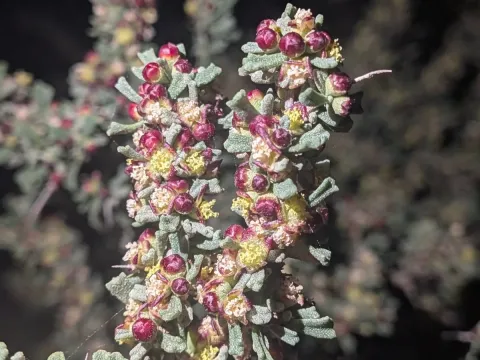
Lawrencia
Lawrencia
Sowing Lawrencia seeds should be performed when the soil is warm enough, ensuring no risk of late frosts which could hinder early seedling development.
What the section contains

Lawrencia
Seeds must be placed at a depth of no more than 2 centimeters to provide sufficient aeration and access to heat necessary for uniform and quick germination.
Using a seed drill or precision planter ensures consistent spacing, which is crucial for managing weed competition during the initial growth stages.
Maintaining a delicate balance of moisture during the germination phase is essential, as the seeds are sensitive to both drought and waterlogging.
Early spring planting is generally recommended in arid zones to allow the plant to establish its deep root system before the peak heat of the summer season.
Lawrencia is a member of the Malvaceae family and is widely recognized for its high degree of adaptation to saline soil conditions, acting as a natural halophyte.
The plant originates from the arid regions of Australia, where it thrives in extreme conditions that would be unsuitable for most conventional agricultural crops.
Full sun exposure is a mandatory requirement for the healthy development of this culture, as it relies on intense radiation for its specialized metabolic processes.
Soil structure should ideally be sandy or loamy with excellent drainage properties to prevent the accumulation of excess water around the taproot system.
It displays remarkable drought tolerance, which makes it an ideal candidate for cultivation in regions with limited irrigation resources or high evaporation rates.
Root rot diseases are the most common issue for Lawrencia, often triggered by excessive rainfall or poor soil drainage that prevents roots from breathing properly.
Spider mites are prevalent pests in hot and dry climates, frequently attacking the foliage and reducing the photosynthetic capacity of the plant significantly.
Fungal infections can occur during humid spells, manifesting as spots on leaves, which requires immediate attention to air circulation and sanitation protocols.
Integrated pest management strategies are advised, focusing on biological controls to maintain the ecological balance within the planting site.
Monitoring for signs of nutrient deficiency or stress is essential, as the plant's ability to process salts can lead to localized soil chemistry shifts.