
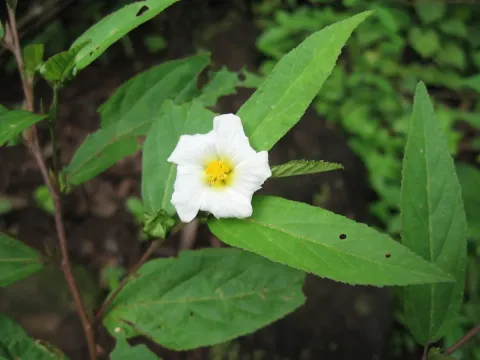
Sida cuspidata
Sida cuspidata
Sida cuspidata is a herbaceous perennial belonging to the Malvaceae family. It is a robust plant species known for its resilience and potential utility in various agricultural applications, ranging from fiber production to biomass energy sources.
What the section contains
Sida cuspidata
Originating from the tropical regions of Africa, this plant is well-adapted to warm climates. Its natural distribution demonstrates an evolutionary ability to withstand prolonged dry seasons, making it a candidate for introduction in various semi-arid agricultural zones.
The plant thrives in well-drained, nutrient-rich soils. It has a low tolerance for waterlogged conditions, which necessitates selecting fields with adequate drainage to prevent root decay and ensure healthy, vigorous plant development.
Climatic requirements for Sida cuspidata include significant solar exposure and stable warm temperatures. Light intensity is a primary factor affecting the accumulation of biomass and the overall quality of the fiber produced during the growing season.
Agronomic management requires meticulous weed control, especially during the seedling stage. Since early growth is relatively slow, implementing integrated pest and weed management strategies is essential to establish a uniform and productive crop stand.
The primary economic use of Sida cuspidata lies in its fiber production. The stems provide high-quality bast fibers, which are durable and versatile, making them suitable for the production of textiles, twine, and composite materials.
The crop is also explored for its potential in the animal feed industry. When harvested at the appropriate vegetative stage, the green matter provides a balanced nutrient profile, though it is crucial to monitor for potential secondary compounds.
Biomass production for bioenergy is another major application. Due to its high dry matter yield per hectare, the plant is considered a viable source for pelleting or other biofuel manufacturing processes, offering a renewable energy alternative.
The crop's yield potential is highly dependent on harvest timing. Harvesting at the peak of vegetative growth maximizes biomass, while harvesting slightly earlier may yield finer, higher-quality fibers suitable for specific technical applications.
Sustainable cultivation of this species provides additional benefits, such as improving soil structure through its deep and extensive root system. This helps in soil aeration and contributes to better moisture retention in the subsequent cropping cycles.