
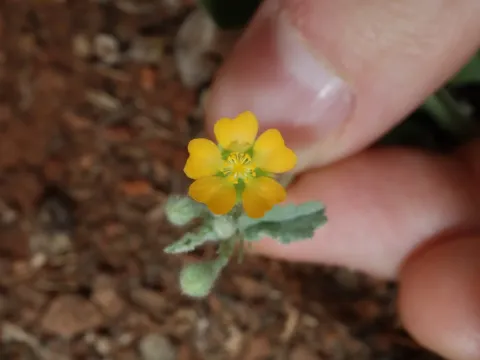
Sida corrugata
Sida corrugata
Sida corrugata, commonly known as corrugated sida, is a perennial herb belonging to the Malvaceae family. Native to Australia, this plant is well-adapted to the harsh conditions of inland rangelands and semi-arid landscapes where other forage crops might struggle.
What the section contains
Sida corrugata
The plant exhibits a prostrate or ascending growth habit, often covered in dense stellate hairs that assist in water retention. Its leaves are typically corrugated, providing a distinctive appearance, while its small yellow flowers are a characteristic feature of the genus Sida.
When considering site requirements, this species thrives in well-drained soils, ranging from sandy loams to heavier clay soils found in floodplains. It displays a remarkable tolerance for soil salinity and prolonged dry spells, making it a resilient component of its native ecosystems.
From an agronomical perspective, corrugated sida is valued for its persistence under grazing pressure. Its root system is capable of sequestering nutrients effectively, allowing the plant to recover quickly after being grazed by sheep or cattle in extensive pasture systems.
In terms of agricultural utility, it serves as a reliable forage source. While not a commercial crop in the traditional sense, its ability to maintain cover and provide nutritional value in arid environments makes it a significant asset for sustainable land management.
The species is susceptible to various fungal pathogens, specifically rusts and leaf spots that can thrive under conditions of high humidity or poor air circulation.
Insect pests, including leaf-eating beetles and larvae, can inflict significant damage during peak growing seasons, reducing the total available biomass for grazing.
Weed competition is a significant threat; as a relatively slow-growing perennial, it can be easily outcompeted by invasive non-native plant species.
Overgrazing during severe drought years can lead to the thinning of populations, as the plant needs time to replenish its carbohydrate reserves in the roots.
Environmental stressors, such as increased frequency of wildfires and changes in soil chemistry due to intensive agriculture, pose ongoing challenges to the stability of local populations.