
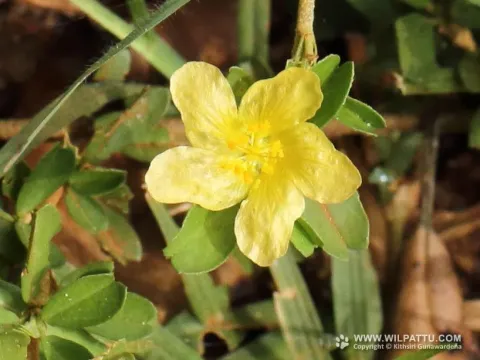
Sida cuneifolia
Sida cuneifolia
Sida cuneifolia belongs to the Malvaceae family and is a perennial plant or semi-shrub. Its natural distribution is concentrated in tropical and subtropical zones, where it thrives in warm, stable environmental conditions.
What the section contains
Sida cuneifolia
The sowing process begins when the soil temperature consistently stays above 18-20 degrees Celsius. Planting in cold or damp soil often results in poor germination rates and reduced vigor for the young seedlings.
Seeds are typically sown at a shallow depth of 1-2 centimeters. Standard row spacing, usually ranging from 45 to 60 centimeters, is implemented to allow for efficient machine maintenance and to prevent overcrowding in the field.
The initial stage of growth is slow for this species, requiring dedicated attention to weed suppression. Ensuring a weed-free seedbed is essential during the first weeks of the plant's life cycle to avoid competition for nutrients.
Pre-treatment of seeds, including sorting and sometimes scarification, can significantly enhance field germination. High-quality initial density is a prerequisite for a uniform crop stand and future successful harvesting.
This crop prefers fertile, well-drained soils, ideally ranging from sandy loams to light clays. A pH level between 6.0 and 7.5 is considered optimal for the best development of the plant's root system.
Sida is a sun-loving plant that requires maximum sunlight exposure to produce high biomass. Excessive shade can inhibit growth, causing the stems to become weak and reducing the final yield of the fiber or plant material.
Consistent moisture is required during the rapid growth phase, although the plant displays moderate drought tolerance once established. Irrigation systems are often utilized in commercial farming to ensure stability.
Climatic requirements strictly limit the growing region to areas with long, frost-free seasons. Sida is highly sensitive to cold weather, and early frosts can cause severe damage or complete mortality of the crop.
Balanced fertilization, particularly the application of nitrogen, plays a key role in stimulating vegetative growth. Proper nutrient management ensures the development of long, strong stems necessary for industrial applications.
Yield outcomes for Sida cuneifolia are highly dependent on soil quality and the management of agricultural practices. Under optimal conditions, the plant produces significant quantities of dry biomass per hectare.
The primary economic focus is the extraction of bast fiber from the stems. Yield is measured by the total weight of the harvested stem material, which serves as a renewable resource for industrial purposes.
The plant's ability to regenerate after cutting allows for multiple harvests within a single long growing season. This biological advantage makes it a highly productive choice for large-scale industrial plantations.
Seed production is an additional yield component. Harvesting at the peak of maturity ensures sufficient supply for the next season's requirements while minimizing the need to purchase external planting material.
Systematic rotation with legumes or cereals can help maintain soil health and maximize yield potential over several years, ensuring that the crop remains profitable for agricultural enterprises.
Fungal diseases, especially those affecting the roots, represent the most significant threat to Sida plantations. High humidity levels combined with stagnant air often trigger these pathogenic outbreaks.
Pests, including various beetle species and lepidopteran larvae, can cause damage to foliage. Regular monitoring and integrated pest management strategies are essential to keep these populations under control.
Preventive measures such as using disease-resistant seeds and maintaining proper spacing are far more effective than chemical treatments. Good ventilation through proper spacing reduces the risk of fungal spread.
Weed control is not only about nutrients but also about disease prevention. By reducing humidity levels near the base of the plant, cultivation helps mitigate the risks of soil-borne pathogens and root rot.
When chemical intervention is required, the use of selective pesticides is recommended to protect the local environment and beneficial insects that may exist within or around the field boundaries.
Harvesting is timed based on the technical maturity of the stems, which is usually reached when the plant's vegetative cycle slows down and the fiber content is at its maximum point of development.
Mechanized harvesting utilizes specialized mowers that cut and collect the stems efficiently. Ensuring the cut is clean and uniform is important for the subsequent processing of the harvested raw material.
Seed harvesting requires a separate approach, usually involving dry weather conditions to allow for optimal threshing. Once gathered, seeds must be thoroughly dried and stored in a cool, ventilated environment.
Proper storage is essential to prevent moisture accumulation, which can lead to mold or spoilage of the harvested materials. Warehouse management should prioritize dry conditions and temperature regulation.
The remaining organic matter after harvest, often called stubble, should be incorporated into the soil. This practice returns nutrients to the field, serving as a natural fertilizer and improving long-term soil structure.