
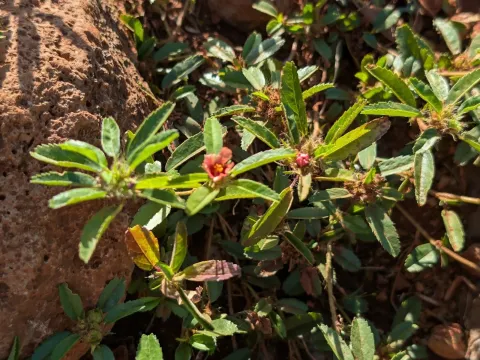
Sida ciliaris
Sida ciliaris
Sida ciliaris, commonly known as fringe sida, is a perennial herbaceous plant belonging to the Malvaceae family. In agricultural practices, it is often propagated by seeds, which require specific temperature conditions for successful germination.
What the section contains
Sida ciliaris
Sowing should ideally occur in well-prepared soil after the threat of frost has passed. Seeds are typically sown at a shallow depth, as they require light to stimulate the germination process effectively.
Establishing an appropriate row spacing is crucial for canopy development. A distance of 45-60 centimeters between rows is usually recommended to ensure adequate light penetration and airflow, which minimizes the risk of fungal diseases.
Seedbed preparation involving light harrowing can significantly improve the emergence rate of seedlings. In areas with high weed pressure, pre-sowing soil solarization or careful mechanical cultivation is advised to give the seedlings a competitive advantage.
Watering shortly after sowing helps to ensure good seed-to-soil contact, which is vital for the initial establishment phase of this resilient species in diverse soil environments.
This species is native to tropical and subtropical regions of the Americas, meaning it thrives in warm temperatures. It is best adapted to regions where temperatures stay consistently between 20 and 30 degrees Celsius during the growing season.
The plant demonstrates a strong preference for well-drained, sandy or loamy soils. While it exhibits some tolerance to poorer soil conditions, the highest biomass yields are obtained on fertile, slightly alkaline substrates.
Sida ciliaris is notably drought-tolerant, possessing a robust root system that allows it to survive periods of limited rainfall. However, supplemental irrigation during extreme droughts can significantly enhance its growth rate and vitality.
High solar radiation is essential for the healthy development of this plant. It is categorized as a light-demanding crop and should not be planted in areas prone to shading by taller vegetation or man-made structures.
Nutrient management involves applying balanced fertilizers, with an emphasis on potassium and phosphorus to support root development and overall plant structure, especially in low-nutrient tropical soils.
The biomass yield of Sida ciliaris is primarily utilized as a forage supplement or for soil stabilization purposes. Under optimal conditions, the plant can produce multiple cuts per season, providing a steady source of green matter.
Productivity is highly dependent on rainfall distribution or the efficiency of an irrigation system. When water is sufficient, the plant enters a phase of rapid vegetative growth, allowing for periodic harvesting of the aerial parts.
Harvesting should be timed to maximize the nutritional value of the foliage. Clipping the plants before they fully transition to the reproductive stage ensures higher protein content and digestibility for potential livestock use.
Field trials suggest that yield stability is a strong characteristic of this species. Even in suboptimal years, Sida ciliaris maintains a level of productivity that makes it a reliable component in diversified agricultural systems.
Proper harvest management, including leaving a sufficient stubble height, is essential for the rapid regeneration of the plant after each cut, ensuring the long-term sustainability of the stand.
Common threats to Sida ciliaris include foliar diseases such as powdery mildew, especially during periods of high humidity. Proper spatial management and ensuring adequate airflow are the primary methods of prevention.
Root rot represents a significant concern in areas with heavy or waterlogged soils. Maintaining good drainage is the most effective cultural practice to mitigate this risk and protect the integrity of the root system.
Various insect pests, including spider mites and aphids, can cause significant damage by feeding on the sap of young, tender leaves. These pests are particularly active during dry, hot spells and may require targeted monitoring.
Nematode infestations can occur, particularly when the crop is grown in monoculture. Rotating Sida ciliaris with non-host crops is a recommended practice to interrupt the life cycles of soil-borne pests.
Integrated pest management strategies should prioritize the use of biological controls, such as predatory mites, to keep pest populations below economic injury levels without relying solely on chemical pesticides.
Harvesting is typically conducted using mechanical cutters or hand tools, depending on the scale of the operation. The plants are usually harvested at the peak of vegetative growth to ensure the highest quality of biomass.
Post-harvest management involves drying the material if it is intended for long-term storage or processing. Quick drying under shade helps to preserve the color and nutritional integrity of the harvest.
If the goal is seed production, harvesting must be delayed until the seed capsules are fully matured and begin to change color, usually indicated by the drying of the surrounding calyx.
Care must be taken during the harvesting process to avoid excessive damage to the base of the plant, which is crucial for encouraging regrowth and ensuring the plant's survival into the next season.
The collected green matter can be processed into silage or fed fresh to livestock, making it a versatile agricultural output that fits well into circular farm management models.