
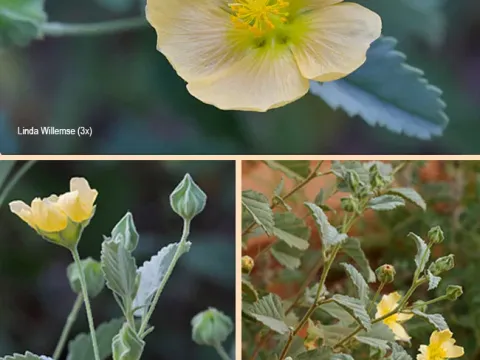
Sida chrysantha
Sida chrysantha
Sida chrysantha is a perennial herbaceous plant belonging to the Malvaceae family. Sowing is typically carried out in early spring once the soil temperature consistently reaches 8–10 degrees Celsius, which provides an ideal environment for germination.
What the section contains
Sida chrysantha
For commercial cultivation, a row spacing of 45 to 70 centimeters is highly recommended. This spacing facilitates optimal access to sunlight and air circulation, which are critical for the robust development of both the root system and the aerial stalks.
Seeds should be planted at a shallow depth of approximately 2–3 centimeters. A deeper planting depth can inhibit germination, whereas shallow placement allows the seeds to utilize moisture efficiently during the early establishment phase.
During the first year, Sida chrysantha grows slowly as it allocates energy to establish its deep root system. Weed control during this initial period is essential, as the young seedlings are vulnerable to competition from more aggressive weeds.
High-precision planting equipment is recommended for large-scale operations to ensure uniform plant density across the field. Consistency in plant placement leads to higher long-term productivity and simplifies mechanical maintenance tasks.
This crop thrives in a variety of soil types but demonstrates the best yield performance in fertile loamy or chernozem soils with a neutral pH. It is crucial to ensure good drainage, as the plant cannot tolerate waterlogged conditions.
Sida chrysantha is highly photophilous and requires full sun exposure to reach its full growth potential. Sufficient sunlight is necessary for efficient photosynthesis and the accumulation of biomass within its sturdy stems.
The plant exhibits significant drought tolerance due to its deep taproot system, which allows it to access moisture from deeper soil layers. While resilient, it benefits from moderate and timely rainfall during the active growth phase.
Temperature requirements are consistent with moderate temperate climates. The plant is well-adapted to survive winter conditions, allowing it to regrow successfully from its rhizomes in subsequent years without the need for reseeding.
Agronomic management should include balanced fertilization, particularly nitrogen inputs at the start of the growing season to encourage vegetative growth. Regular inter-row cultivation helps maintain soil structure and aeration.
Sida chrysantha is primarily valued for its significant biomass yield, making it an excellent candidate for renewable energy production. It provides a stable and renewable source of organic material that can be processed into energy pellets.
As a forage crop, the timing of harvest is critical. It must be cut before the stems become overly lignified to ensure high nutritional value, specifically high protein content, which is suitable for silage or haylage production.
Beyond energy and fodder, the plant's fibrous stalks are useful in the production of cellulose and technical fibers. This multifunctionality enhances the economic viability of the crop for diverse farming operations.
Productivity typically peaks between the third and fifth years of establishment, once the root system has fully matured. With proper care and fertilization, the yield can remain stable for a considerable amount of time.
Yield metrics are highly dependent on localized climate conditions and soil fertility management. Extensive field data shows that this crop remains a robust option for farmers looking to diversify their agricultural output.
The crop is naturally resistant to most common pests and diseases, which significantly lowers the need for chemical interventions. Its anatomical structure and chemistry contribute to its hardiness in agricultural settings.
Fungal diseases like powdery mildew may appear in conditions of extremely high humidity and lack of airflow. Proper field planning and maintaining recommended planting density are effective ways to prevent such issues.
Sucking pests such as aphids might occur sporadically, but they rarely cause significant economic damage to mature plants. If an infestation occurs, selective, low-toxicity insecticides are usually sufficient to manage the situation.
Preventing root rot is vital, and this is best achieved by avoiding soil compaction and waterlogging. Ensuring the field has adequate drainage is a proactive step that protects the long-term health of the plantation.
Routine scouting of the field throughout the growing season is the most reliable method for monitoring the health of the crop. Early detection allows for targeted maintenance if any localized problems are identified.
Harvesting is usually done using mechanized forage harvesters equipped with shredders. The specific timing depends on the intended end-use of the biomass or forage product being generated by the operation.
For energy production, harvesting is ideally performed toward the end of the season when the moisture content of the stalks has naturally declined. This reduction in moisture simplifies logistics and reduces the need for artificial drying.
When intended for fodder, the harvest should take place at the bud initiation stage. This ensures the harvested material retains sufficient succulence and nutrient density, which is essential for healthy animal digestion.
Post-harvest management involves clearing any major residue from the field to keep the area clean for the next season. The residue can be integrated back into the soil as mulch or used for other composting purposes.
Special care should be taken to adjust machinery so that it does not damage the perennial root stocks. Efficient harvesting methods are essential to ensure the longevity of the plant and its success in future seasons.