
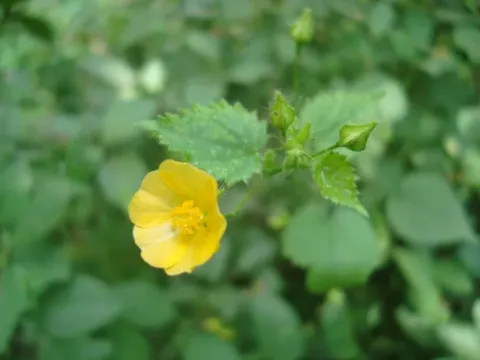
Sida caudata
Sida caudata
Sida caudata is a warm-season crop that requires careful timing for sowing to ensure successful germination. Planting should only commence once the soil temperature consistently reaches 15-18 degrees Celsius, typically after the danger of spring frosts has completely passed.
What the section contains
Sida caudata
For uniform emergence, the seedbed must be finely prepared to ensure good contact between the seed and the soil. Adequate moisture levels are crucial during the early stages, as the seeds have a relatively hard coat that requires consistent soil contact to trigger germination.
The optimal seeding depth ranges from 2 to 4 centimeters. In lighter, sandy soils, slightly deeper planting is acceptable, whereas in heavier clay soils, seeds should be placed closer to the surface to allow the emerging seedlings to break through the ground with minimal energy expenditure.
Row spacing is generally set between 45 and 60 centimeters, facilitating mechanical inter-row cultivation. This spacing helps manage weed competition, which is vital for the crop during its slower initial growth phase, and ensures sufficient airflow across the plantation.
Seeding rates should be determined based on the laboratory-tested germination percentage of the seed lot. Utilizing precision planters is highly recommended to achieve an even distribution of plants across the field, which minimizes inter-plant competition for light and nutrients.
As a member of the Malvaceae family, Sida caudata thrives in warm climates with high solar radiation. It requires well-drained, fertile loam soils to reach its maximum productivity, as it is highly sensitive to waterlogged conditions that can lead to root rot.
The ideal soil pH for this crop is within the neutral range, specifically between 6.0 and 7.5. Soils that are too acidic require lime application prior to sowing to optimize the nutrient uptake and overall development of the plant's robust root system.
Nutrient management is key, with a focus on nitrogen application during the peak vegetative growth phase to maximize biomass production. Phosphorus and potassium are also essential for strengthening the structural integrity of the plant's stalks and improving overall resilience.
Sunlight exposure is a primary requirement; shading by surrounding vegetation or trees will negatively affect growth rates and fiber quality. Selecting open, unobstructed sites for cultivation ensures the crop receives the energy needed for its metabolic processes.
Field preparation must include deep plowing and thorough secondary tillage to incorporate residues and eliminate perennial weed species. Creating a clean environment at the start of the season allows the Sida to establish its canopy quickly, thereby naturally suppressing subsequent weed growth.
The primary threats to Sida caudata involve various fungal pathogens, particularly those causing leaf spots or stem blights, which thrive under conditions of high humidity. Preventive measures include ensuring proper plant density to maintain adequate airflow around the foliage.
Insect pests, such as aphids and certain leaf-feeding beetles, can damage seedlings in the early vegetative stages. Regular scouting of the field is necessary to identify infestations before they cause significant economic damage to the plant stand.
Weed management remains the most critical aspect of the crop's health. By employing mechanical cultivation in the early stages, farmers can prevent weeds from shading out the young Sida, which is relatively slow to develop in its first few weeks after emergence.
Integrated pest management strategies are preferred to maintain the long-term ecological balance of the field. Crop rotation is an essential tool; avoiding other Malvaceae family members in the same field for several years helps keep the soil free from host-specific pathogens.
Should chemical intervention be required due to severe outbreaks, selective products should be applied with precision. However, prioritizing cultural practices—such as proper soil drainage and adequate spacing—remains the most effective way to minimize the pressure from pests and diseases.