
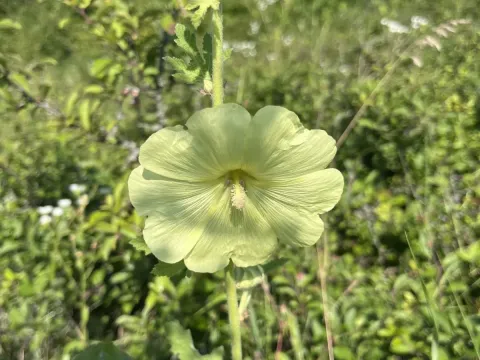
Wrinkled hollyhock
Alcea rugosa
Sowing of Alcea rugosa seeds in open ground is best carried out in late spring when the soil has warmed up sufficiently, ensuring steady germination.
What the section contains
Wrinkled hollyhock
Alternatively, autumn sowing in October is recommended in regions with milder winters to facilitate natural seed stratification for the upcoming season.
For container-grown seedlings, seeds should be sown in March, using a well-draining potting mix and maintaining an ambient temperature of 18–20 degrees Celsius.
Once seedlings develop two true leaves, they should be hardened off before being transplanted into their permanent location in the garden or field.
Proper spacing of 50 centimeters between plants is essential to ensure adequate airflow, which is critical for reducing humidity levels around the foliage.
The wrinkled hollyhock is a hardy member of the Malvaceae family, known for its deep taproot system which provides significant resistance to drought conditions.
It thrives in full sunlight, which is necessary for the development of sturdy stalks and the production of numerous bright yellow, ruffled flowers.
The ideal soil is fertile, loose, and well-draining, with a preference for a neutral to slightly alkaline pH, which promotes robust growth and overall longevity.
While the plant is drought-tolerant, supplemental irrigation during prolonged dry spells will maximize the number of blooms and overall plant vigor throughout summer.
Fertilization with a balanced, slow-release fertilizer in early spring can help supply necessary nutrients for the rapid development of the tall flower spikes.
Rust is the most common fungal disease affecting this species, appearing as orange-brown pustules on the undersides of the leaves during humid summer months.
Integrated pest management strategies, such as improving air circulation and removing affected leaves early, are primary methods for managing rust infections.
Pests like aphids and spider mites can infest the plant, causing foliage yellowing and reduced vigor, often requiring the application of horticultural oils.
Monitoring the plant for signs of insect damage is essential during the active growing season to apply control measures before the population explodes.
Strict garden hygiene, including the removal and destruction of all plant debris in late autumn, is vital to prevent overwintering of pathogens and pests.