
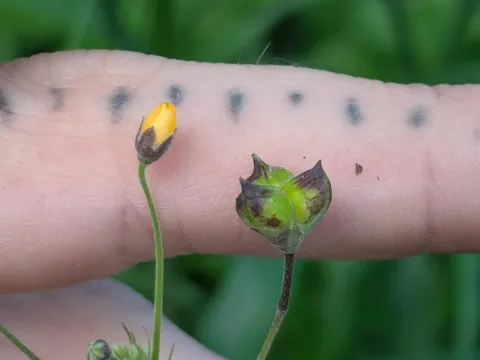
Wissadula
Wissadula
Wissadula is a genus of flowering plants in the mallow family, Malvaceae, valued for its potential in fiber production. Sowing should be carried out when the soil temperature is consistently above 20 degrees Celsius, which encourages rapid and uniform germination.
What the section contains
 Wissadula amplissima
Wissadula amplissima
Wissadula amplissima
 Wissadula contracta
Wissadula contracta
Wissadula contracta
 Wissadula excelsior
Wissadula excelsior
Wissadula excelsior
 Wissadula hirsuta
Wissadula parviflora
Wissadula parviflora
Wissadula hirsuta
Wissadula hirsuta
Wissadula parviflora
Wissadula parviflora
 Wissadula periplocifolia
Wissadula periplocifolia
Wissadula periplocifolia
 Wissadula rostrata
Wissadula subpeltata
Wissadula subpeltata
Wissadula rostrata
Wissadula rostrata
Wissadula subpeltata
Wissadula subpeltata
Wissadula
The optimal sowing time generally occurs during the transition to the rainy season in tropical and subtropical regions. This ensures that the seeds have enough moisture available during the sensitive early stages of seedling development.
Rows should be spaced sufficiently to allow for mechanical weeding, which is essential for maximizing yields. A sowing depth of 2 to 3 centimeters is considered ideal for ensuring that the seedlings can emerge successfully without excessive energy expenditure.
Thorough soil preparation, including plowing and discing, is crucial before sowing to create a fine seedbed. This helps to improve the contact between the seed and the soil particles, facilitating efficient moisture uptake.
After emergence, plants should be thinned to a predetermined population density. Proper plant spacing is a fundamental factor in controlling the thickness of the stems, which ultimately determines the quality of the harvestable fiber.
Wissadula thrives in regions with high ambient temperatures and abundant sunlight. It is sensitive to frost and does not tolerate prolonged cold spells, making it exclusively a warm-season crop.
The plant performs best on well-drained, sandy loam or loamy soils. It has a notable intolerance for waterlogging; therefore, selecting fields with natural or artificial drainage is critical for preventing root rot.
While the plant is relatively drought-tolerant once established, irrigation during peak growth periods can significantly boost the overall biomass production. Consistent moisture levels during the vegetative phase ensure superior stem growth.
Fertilization strategies should focus on nitrogen and phosphorus application. Balanced nutrient management helps to promote vigorous stem elongation and improves the final strength of the extracted bast fibers.
Soil pH should ideally be kept within the neutral to slightly acidic range. Routine monitoring of soil fertility levels allows for precise application of nutrients, which is key to sustaining high yields across multiple seasons.
The yield of Wissadula is measured by the total quantity of bast fiber extracted from the stems. The fiber quality is dependent on the age of the plant at the time of harvesting and the subsequent processing techniques used.
High-density cultivation can result in impressive yields per hectare. Modern agrotechnical practices focus on maximizing the height of the stems while keeping the diameter thin, which is preferred for high-quality fiber applications.
Secondary yields include seeds which can be utilized for their oil content. Extracting value from these by-products improves the overall economic viability of the agricultural operation.
Yield management requires careful monitoring of the crop's development cycle. Harvesting too early results in weak fibers, while harvesting too late leads to coarse, lignified fibers that are difficult to process.
Regular rotation with other crops is essential to maintain soil fertility and break the life cycles of common soil-borne pathogens, ensuring that yields remain stable over long-term production cycles.
Common pests affecting Wissadula include sap-sucking insects like aphids and mites, which can significantly damage the foliage and stunt plant growth. Integrated pest management strategies, including the use of beneficial insects, are recommended.
Fungal diseases, particularly those causing root rots and stem blights, can be devastating in conditions of high humidity and poor air circulation. Proper spacing between rows is a simple but effective preventive measure.
Weed competition poses a significant threat during the first few weeks of the crop's life. Effective weed control via mechanical cultivation is necessary until the Wissadula plants reach a sufficient height to shade out competitive weeds.
Systemic fungicides may be required if severe disease outbreaks occur, but preventive seed treatments are often more effective. Monitoring the fields weekly helps in the early detection and localization of any disease outbreaks.
Environmental stress, such as extreme heat or unexpected flooding, can make the crop more susceptible to various opportunistic pathogens, highlighting the need for maintaining overall plant health through optimal nutrition.
Harvesting is typically done at the beginning of the flowering stage, when the fiber content is at its highest quality. Using specialized harvesting equipment ensures the stems are cut cleanly at the base.
Once harvested, the stems undergo a process known as retting to loosen the fiber from the woody core. This can be achieved through water retting or dew retting depending on the available infrastructure and climate.
After the retting process is complete, the fibers are separated, washed, and dried. Careful drying is essential to prevent discoloration and to ensure that the fiber remains pliable for later industrial processing.
Once dried, the fiber is sorted, graded by length and strength, and compressed into bales for transport. Proper storage in dry, well-ventilated warehouses is required to maintain quality until the fiber reaches the mill.
Seed harvest, when practiced, involves collecting the mature capsules once they have dried naturally on the plant. Proper cleaning and sorting of the seeds are required to maintain their viability and prevent spoilage.