
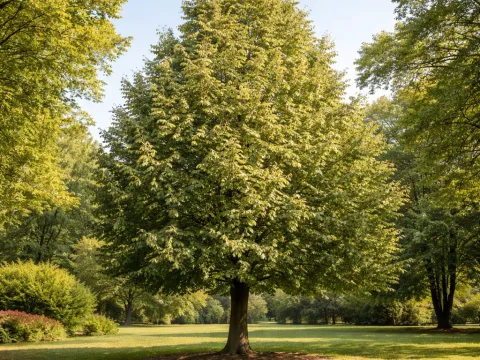
Yellow linden
Tilia flavescens
The yellow linden (Tilia flavescens) is a botanical hybrid belonging to the Malvaceae family. It is recognized for its broad, impressive canopy and its ability to thrive in temperate forest ecosystems across various geographic regions.
What the section contains
Yellow linden
This species requires deep, fertile, and well-drained soils to reach its full potential. While it exhibits tolerance to varied soil compositions, it thrives best in loam or sandy loam substrates that retain moisture without becoming waterlogged.
In terms of climate, Tilia flavescens is highly adaptable and hardy, capable of enduring cold winters. Optimal growth is achieved in locations receiving plenty of sunlight, though it can tolerate partial shade in its juvenile stages.
Agronomic management involves regular irrigation during the initial establishment phase and the application of organic mulch around the base to preserve soil moisture and regulate temperature. Periodic inspections are essential to maintain the structural integrity of the tree.
The tree serves significant economic roles, primarily as a high-quality ornamental plant for large landscapes and as a prolific nectar source for honeybees. Its wood remains highly prized for furniture, carving, and instrument making due to its lightweight and fine texture.
The yellow linden is susceptible to infestation by various aphid species, which can cause significant stress and the appearance of sooty mold.
Linden moth larvae may target the foliage, causing extensive defoliation if populations are left unchecked during the spring and early summer months.
Leaf spot diseases are common in environments with poor air circulation or extended periods of high humidity, impacting the tree's photosynthesis capabilities.
Integrated pest management, including the use of systemic insecticides and proper pruning to improve canopy airflow, is recommended for plantation health.
Consistent monitoring for early signs of decay or fungal growth on the bark is crucial to prevent long-term damage to the tree's vascular system.