
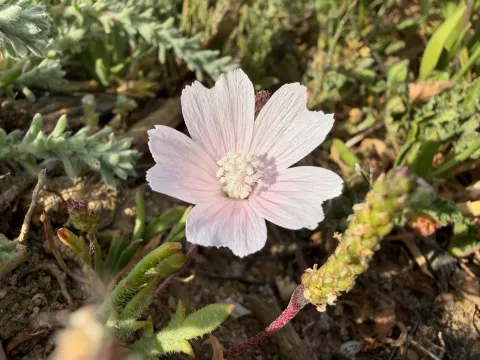
Spanish mallow
Malva hispanica
Spanish mallow (Malva hispanica) is an annual or biennial herbaceous plant belonging to the Malvaceae family. Sowing is typically performed in the spring once soil temperatures reach a consistent 10–12°C, ensuring optimal germination conditions.
What the section contains
Spanish mallow
For large-scale agricultural cultivation, seeds are sown at a depth of 2–3 centimeters, depending on the soil texture. Proper bed preparation is essential for achieving uniform plant density and high initial vigor.
Row spacing is generally maintained at 45–60 centimeters, allowing for adequate light penetration and space for mechanical weeding. A seeding rate of 8–12 kilograms per hectare is standard for ensuring a dense, productive stand.
In Mediterranean climates, autumn or winter sowing can be advantageous, as it allows plants to establish their root systems before the onset of summer heat. This technique often results in higher biomass yields.
Seeds should be treated with appropriate fungicides before planting to prevent damping-off, a common issue in cool, wet soils. Following the sowing process, light rolling can help improve seed-to-soil contact.
This species thrives in sunny, open locations, as shade significantly retards its vegetative growth. It is relatively drought-tolerant but requires sufficient moisture during the active growing season to reach its full potential.
Spanish mallow prefers fertile, well-drained loamy soils with a neutral pH level. While it can adapt to various soil types, excessive moisture or waterlogging should be avoided to prevent root diseases.
Adequate soil fertility, particularly the presence of nitrogen and phosphorus, is crucial for promoting vigorous growth. Organic amendments or balanced NPK fertilizers should be applied during the initial soil preparation stage.
The plant performs best in temperature ranges between 18°C and 25°C. It is capable of enduring minor temperature fluctuations, but prolonged cold snaps can severely limit its development speed during early growth phases.
Proper field maintenance involves regular monitoring of soil moisture levels. In dry regions, supplemental irrigation during the budding and flowering stages can substantially increase the final yield of both seeds and foliage.
The yield of Spanish mallow is highly dependent on agricultural practices and favorable weather. Under optimal management, the plant produces significant biomass that is highly valued as a nutrient-rich forage source.
In forage production systems, the green mass yield can reach 20–30 metric tons per hectare. Multiple harvests within one season may be possible if conditions remain favorable and the plant is managed correctly.
Seed yield varies between 500 and 800 kilograms per hectare depending on crop intensity. Timely weed control is the most important factor in maximizing seed set, as weeds compete aggressively for resources.
Higher sowing density, up to a certain point, can help suppress weeds, thereby improving the overall clean yield. Precision farming techniques help in optimizing plant spacing to minimize resource competition.
Applying micronutrients, specifically during the reproductive phase, can boost seed quality and quantity. This is a critical practice for farms dedicated to producing high-germination planting material.
Aphids are the most common pests, frequently targeting young leaves and shoots, which can stunt plant growth. Integrated pest management, including the use of beneficial insects, is recommended for effective control.
Rust diseases are a major threat to Spanish mallow, often manifesting as brown or orange spots on the underside of leaves. Strict adherence to crop rotation cycles is the primary defense against such fungal outbreaks.
Powdery mildew can infect the crop during humid periods, appearing as a white dusty coating on the foliage. Application of systemic fungicides or maintaining good field ventilation can prevent severe damage.
Slugs and snails can cause significant damage to young seedlings during damp spring weather. Barriers or bait traps can be employed to protect the vulnerable young crop before it reaches full size.
Nematodes represent a hidden but serious risk to root systems, potentially causing yellowing and stunted development. Regularly testing soil health and rotating with resistant crops like cereals is highly recommended.
Harvesting for forage should take place at the peak of flowering, as this is when the plant's nutritional density is at its highest. Cutting the crop before the stems become overly fibrous is key to maintaining palatability.
For seed production, harvesting begins when the lower seed pods turn dark and the seeds inside are fully developed. Direct combining or two-stage harvesting methods are used depending on the weather conditions.
Post-harvest drying is essential for seed crops to ensure moisture levels drop to below 14% for safe, long-term storage. Using ventilated storage facilities helps prevent mold and heat damage to the harvested seeds.
The green mass can be processed into silage or haylage, making it a reliable feed source for livestock throughout the winter. Speed of harvest is critical to capture the biomass at the correct growth stage.
Stubble management post-harvest involves discing or plowing the field to incorporate organic material back into the soil. This practice helps destroy overwintering sites for pests and prepares the soil for subsequent crops.