
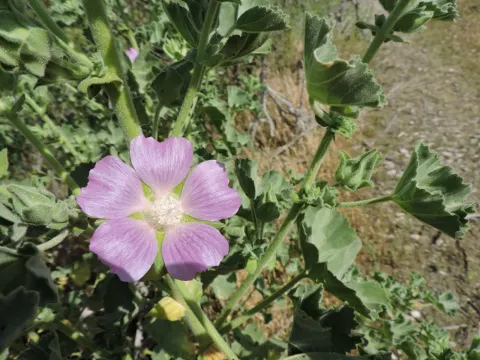
Portuguese mallow
Malva lusitanica
Portuguese mallow (Malva lusitanica) belongs to the Malvaceae family. It is a crop recognized for its robustness and potential utility in agricultural systems, particularly in regions with mild climates and specific environmental conditions.
What the section contains
Portuguese mallow
The sowing window for this crop typically begins in the early spring once the soil temperature is consistently above 10 degrees Celsius. This ensures timely germination and vigorous initial growth of the young seedlings.
When sowing, the seeds are placed at a depth of approximately 2–3 centimeters. Proper soil contact is essential to ensure moisture absorption, which is the primary trigger for uniform seed emergence in the field.
Seed density is adjusted based on the intended use of the crop. For green forage production, higher sowing rates are employed to encourage rapid biomass accumulation and prevent the development of overly woody stalks.
Post-sowing rolling is highly recommended in many agrotechnical guides. This practice consolidates the soil around the seeds, reducing air pockets and facilitating consistent hydraulic conductivity for improved germination.
Portuguese mallow thrives in well-drained soils with moderate fertility. It performs best on loam or sandy-loam textures, avoiding heavy, waterlogged clays that can cause root hypoxia and limit growth rates.
The climate requirements include a preference for temperate, sun-exposed environments. While it demonstrates resilience to heat, extreme temperature fluctuations during the early developmental phases can hinder overall yield.
Light availability is a critical factor for successful cultivation. Being a sun-loving plant, it requires unobstructed light to maximize photosynthetic efficiency and produce the biomass density required for agricultural harvesting.
Water requirements should be met through natural rainfall or supplementary irrigation during the critical stages of vegetative development. Consistent soil moisture leads to better plant vigor and increased biomass volume.
Fertilization regimes focus on nitrogen to support lush foliage growth, balanced with potassium to improve plant stability and stress tolerance. Organic amendments are often effective in improving soil structure for this species.
Fungal diseases, specifically rust, represent a primary biological threat to the crop. These pathogens form pustules on the foliage, significantly reducing the crop's ability to photosynthesize and lowering its feed quality.
Powdery mildew can become a significant issue during periods of high humidity and poor air circulation. It manifests as a white, powdery fungal mat that can rapidly cover the leaves and weaken the plant.
Pests, such as aphids and leaf-eating beetles, often target the younger, more succulent leaves. Monitoring populations during the growing season is crucial to prevent widespread damage that could limit plant development.
Weed management is vital in the early stages of crop establishment to prevent competition for nutrients, water, and sunlight, as young Malva plants are relatively slow to canopy and shade the ground.
Implementation of a rigorous crop rotation strategy helps mitigate the buildup of soil-borne pathogens and insect larvae, ensuring the long-term productivity and health of the field in consecutive growing cycles.