
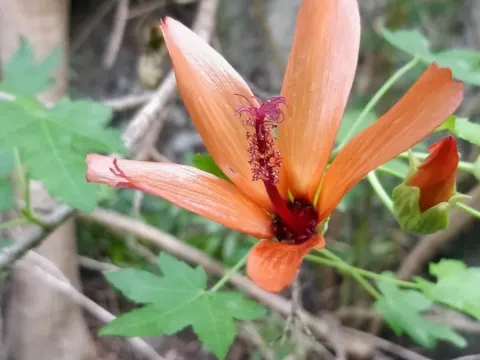
Purple mallow
Malva phoenicea
Purple mallow (Malva phoenicea), a prominent member of the Malvaceae family, requires specific environmental conditions to achieve optimal stand establishment.
What the section contains
Purple mallow
The sowing process begins in the early spring, ensuring that the soil temperature has reached a stable range for consistent and uniform germination.
Direct seeding is the preferred method for commercial plantations, with seeds placed at a shallow depth of approximately 2-3 centimeters for best results.
Row spacing is a critical factor, and for mechanical maintenance, it is recommended to maintain a distance of at least 50 centimeters between rows.
Consistent moisture immediately following the sowing period is vital for the survival of the seedlings and the subsequent vigorous development of the plant root system.
As a light-loving species, purple mallow must be cultivated in open fields that receive maximum solar radiation throughout the entire growing season.
The ideal soil profile includes high nutrient content, specifically well-drained loam, which prevents water stagnation and promotes healthy vegetative growth.
While the crop demonstrates resilience to dry spells, irrigation should be applied during the flowering phase to prevent premature shedding of blooms.
Nutrient management involves balanced fertilization, focusing on nitrogen during early development and phosphorus during the reproductive growth phase.
- Soil fertility levels sufficient for supporting rapid biomass accumulation.
- Exposure to direct sunlight without inter-cropping or canopy shade.
- Controlled irrigation during critical developmental windows.
Rust disease (Puccinia malvacearum) remains the primary threat to the crop, potentially causing significant foliage loss if not managed effectively.
Powdery mildew represents another major challenge, particularly when high humidity and stagnant air conditions persist within the plantation.
Insect pests, including various species of aphids, can stunt growth and transmit diseases, necessitating a structured integrated pest management plan.
Regular monitoring of field edges for initial signs of infestation allows for localized treatment, effectively reducing the need for broad-spectrum chemical sprays.
Strategic crop rotation practices are highly effective in breaking the lifecycle of soil-borne pathogens and maintaining soil health over multiple years.
The harvest should be timed precisely during the peak flowering stage to maximize the commercial value and active component content of the harvested material.
Post-harvest handling is critical; plants should be processed through rapid drying to preserve the integrity of the phytochemical properties within the harvest.