
Pseudobombax
Pseudobombax
Pseudobombax is a genus of deciduous trees belonging to the Malvaceae family. Native primarily to the tropical regions of the Americas, these trees have evolved to thrive in environments with distinct wet and dry seasons.
What the section contains


Pseudobombax
The defining botanical feature of the genus is its pachycaul trunk, which is swollen at the base. This adaptation allows the tree to store significant amounts of water, functioning similarly to a succulent during arid conditions.
The climate requirements for Pseudobombax are strictly tropical or warm subtropical. The plants are highly intolerant of freezing temperatures and require a frost-free environment to maintain their health and structural integrity.
Regarding soil, drainage is the most critical factor. The root system is prone to rot in waterlogged conditions, so growers must use a porous, well-draining soil mix such as a combination of sandy loam and perlite.
Standard agrotechnical management involves a cycle of active growth with moderate watering and a dormancy period. During dormancy, which usually coincides with leaf drop, irrigation must be significantly reduced to mimic the natural cycle.
Pseudobombax is primarily susceptible to common indoor and greenhouse pests, such as mealybugs and scale insects, which can congregate on the smooth, succulent-like bark and young shoots.
Fungal diseases are a major threat, particularly root rot caused by Phytophthora or Pythium species, which are triggered by excessive moisture or poor aeration of the potting medium.
Management of these threats involves strictly maintaining hygiene in the cultivation area and ensuring proper air circulation around the trunk and branches to prevent fungal development.
Proactive care involves monitoring for aphids during the budding season, as they can damage the delicate flower buds before they fully expand into their signature showy blooms.
In case of infestation, organic treatments like neem oil are preferred, as the plant can be sensitive to harsh chemical pesticides applied to its sensitive bark tissues.
Pseudobombax is primarily utilized as an ornamental specimen in landscaping and interior plant design. It is highly prized by collectors for its sculptural form and unique trunk architecture.
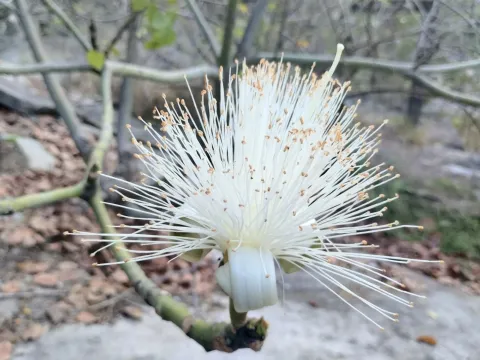
The tree produces large, distinctive flowers with prominent stamens that make it a centerpiece in botanical collections and high-end landscape projects in tropical regions.
It is a popular choice for bonsai enthusiasts who utilize its ability to withstand pruning to maintain a miniature, gnarled appearance while showcasing its impressive base.
While not a traditional industrial crop, the fiber surrounding the seeds in the fruit capsules has been historically noted for its qualities, though it is rarely harvested on a commercial scale today.
Propagation is typically achieved through seeds harvested from the dehiscent capsules. The seeds are often covered in a fine, silky fiber that must be handled carefully to prevent inhalation or irritation.