
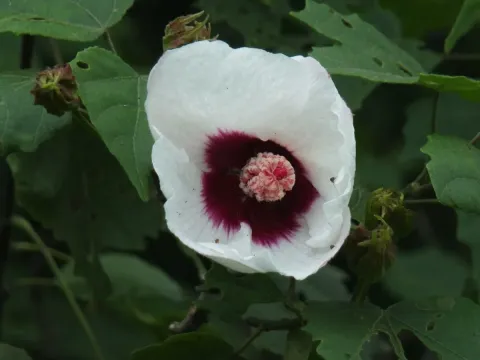
Plane-leaved hibiscus
Hibiscus platanifolius
The plane-leaved hibiscus (Hibiscus platanifolius) belongs to the Malvaceae family. It is a distinctive woody plant known for its broad leaves that closely resemble those of the sycamore or plane tree, combined with beautiful floral characteristics.
What the section contains
Plane-leaved hibiscus
Native to tropical and subtropical climates, this species thrives in environments with consistent warmth. In temperate regions, it is primarily managed as a container plant that must be moved indoors or to a greenhouse during the colder months to avoid frost damage.
This crop requires well-drained, fertile, and nutrient-rich soil to reach its full potential. It prefers a slightly acidic to neutral pH balance, which ensures the proper uptake of essential micronutrients required for healthy vegetative growth.
Regarding placement, full sun or partial shade is recommended, provided the plant is shielded from harsh, direct midday heat. Sufficient light is critical, as it directly influences both the plant's structural integrity and its ability to produce flower buds.
Routine horticultural practices include a consistent watering schedule during the peak growing season, ensuring the substrate remains moist but never waterlogged. Regular application of a balanced liquid fertilizer is beneficial for sustaining the plant's energy levels.
Common pests that affect this hibiscus include aphids, spider mites, and whiteflies. These insects frequently target tender shoots and leaf undersides, potentially leading to stunted growth if left unmonitored.
Fungal issues, such as powdery mildew, often arise when there is inadequate ventilation or excessive humidity. These conditions promote the development of spores, which can quickly spread across the foliage, causing discoloration and leaf drop.
Root rot is a significant risk if the potting medium lacks proper drainage or if the plant is overwatered. Careful management of the soil moisture is essential for preventing these destructive soil-borne pathogens from taking hold.
Effective pest control strategies often involve integrated pest management, including the use of horticultural oils or insecticidal soaps. Early detection through regular visual inspections is crucial for maintaining a healthy specimen.
Furthermore, maintaining good sanitation by removing fallen leaves and pruning off diseased branches helps reduce the inoculum levels of pathogens in the immediate environment of the plant.