
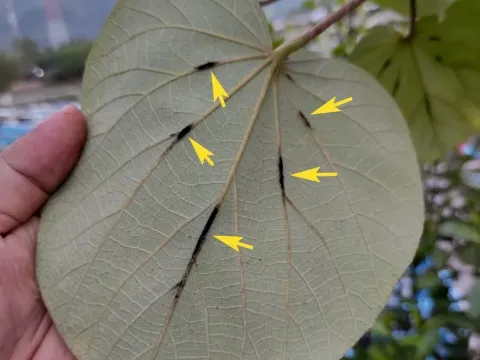
Hibiscus similis
Hibiscus similis
Sowing Hibiscus similis is performed during the onset of stable warm weather, as the crop is highly sensitive to soil temperature. The optimal time for seeding is the beginning of the rainy season, ensuring sufficient moisture for germination.
What the section contains
Hibiscus similis
Seeds are sown in rows with spacing adequate for mechanical cultivation. Sowing depth is typically kept between 2–3 centimeters to ensure uniform seedling emergence.
In industrial cultivation, managing plant density is crucial to prevent competition for sunlight. Excessive crowding leads to a reduction in fiber quality and weakens the structural integrity of the stems.
Pre-stratification or seed soaking can improve field germination rates. It is recommended to use fresh seeds, as their viability decreases significantly over time.
After emergence, thinning is performed, leaving only the healthiest plants at intervals of 20–30 centimeters. This provides the necessary space for vigorous vegetative growth.
Hibiscus similis belongs to the Malvaceae family and is a perennial shrub or small tree native to the tropical regions of Southeast Asia.
The crop prefers well-drained fertile soils with a neutral or slightly acidic pH. Waterlogging negatively impacts the root system, triggering decay and root rot processes.
Normal development requires a consistently high temperature regime, excluding any frost. The plant is photophilous and requires open fields without shade to thrive.
The plant has a high requirement for nitrogen fertilizers during the early stages of growth. Maintaining optimal mineral nutrition levels directly correlates with the quality of the bast fiber harvested from the stems.
In its natural habitat, the species is found in humid forests and riparian zones; however, in agriculture, it is cultivated on managed plots with efficient irrigation systems.
The primary product of this plant is valuable vegetable fiber, extracted from the stems through maceration. Green biomass yield depends directly on the quality of maintenance and climatic conditions during the growing season.
Fiber yield per hectare is comparable to other technical hibiscus species. The quality of the raw fiber is determined by the timing of the harvest and the adherence to primary processing technologies.
In addition to fiber, the plant provides biomass suitable for use as green manure. In some regions, seeds are harvested to extract technical-grade oils.
Yields remain stable with regular applications of organic and mineral fertilizers. A critical factor is preventing crop lodging during periods of active growth.
Maximum productivity is observed in fields with deep humus layers. Under intensive farming practices, optimal output of industrial-grade products can be achieved.
Hibiscus similis is susceptible to specific pests of the Malvaceae family, such as cotton aphids and various spider mites. These pests damage young leaves, slowing down growth rates.
Root rot is the most dangerous disease, occurring when water management is poor or soil structure is too heavy. Fungal infections can spread rapidly under high humidity conditions.
Leaf spot caused by bacterial pathogens reduces the photosynthetic capacity of the plants. Fungicides and crop rotation are used to mitigate these risks.
Stem-boring insects can compromise the integrity of the bast fibers. Preventive insecticide treatments should be carried out strictly according to the developmental stages of the pests.
- Regular field health monitoring
- Strict adherence to phytosanitary standards
- Usage of resistant cultivars
- Spatial isolation from wild Malvaceae species
- Timely weed control
The harvest is carried out at the end of the flowering period, when the fiber content in the stems reaches its maximum level. At this stage, the stems possess optimal flexibility and strength.
Plants are cut using specialized mowers or harvesters directly at the soil surface. After mowing, the material is left for a short period to wither.
Subsequent processing involves macerating the stems in water bodies or specialized tanks to separate the bast. This stage is critical for maintaining the quality of the natural fiber.
Drying the extracted fiber is performed under natural conditions with good air circulation. It is important to avoid prolonged direct UV exposure to maintain fiber elasticity.
After drying, the fiber is cleaned of woody remnants (shive) and sorted by length and strength. The high-quality product is used in the textile and paper industries.