
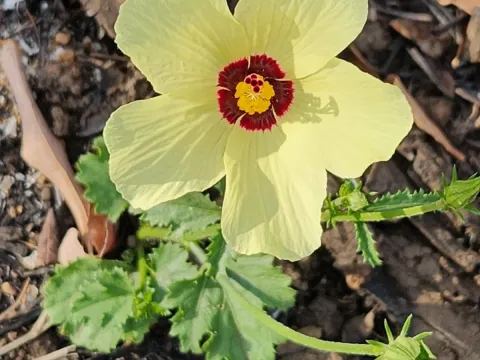
Hibiscus pusillus
Hibiscus pusillus
Hibiscus pusillus belongs to the Malvaceae family. It is a perennial herbaceous plant naturally occurring in hot and arid climates, primarily found in African savannas and parts of South Asia.
What the section contains
Hibiscus pusillus
The crop requires consistently high temperatures for active vegetation. Seeds are sown in well-warmed soil after the risk of frost has passed, as seedlings are highly sensitive to cold conditions.
The optimal time for establishing plantations is at the start of the rainy season or during spring if irrigation systems are available. Commercially, it is utilized as a fibre source or for ornamental purposes depending on local agricultural practices.
Sowing is conducted in rows with sufficient spacing to ensure air circulation, as the plant tends to become overcrowded under conditions of excessive soil moisture.
Pre-sowing treatment of seeds, such as scarification, is essential to improve germination rates, given that the seed coat of Hibiscus is relatively thick and inhibits rapid emergence.
The plant prefers well-drained sandy or loamy soils with neutral pH levels. It exhibits high drought resistance but responds negatively to waterlogging, which can cause root system stress.
Full sunlight throughout the day is necessary for optimal development. Shade causes the plant to become leggy, significantly reducing biomass production or floral yield.
Agronomic management involves regular inter-row cultivation to ensure oxygen access to the roots and effective weed control, which is crucial for young crop protection.
Fertilizers should focus on phosphorus and potassium complexes to stimulate root development and enhance the plant's resistance to temperature fluctuations.
Under industrial farming conditions, it is vital to maintain appropriate soil moisture during critical growth stages, although mature plants can withstand prolonged dry spells successfully.
Fungal diseases pose a primary threat to the crop, particularly in environments with high humidity and poor air movement within the plantation canopy.
Common pests include members of the order Hemiptera, such as aphids and spider mites, which feed on leaf sap and weaken the overall vitality of the plant.
Root rot may occur due to improper irrigation management, requiring the immediate removal of infected specimens to prevent further spread of the pathogen.
Insect population control involves a combination of biological methods, such as utilizing natural predators, and the application of broad-spectrum modern insecticides when necessary.
Preventive measures emphasize strict crop rotation; Hibiscus should not be planted on the same plot for at least three to four years following other members of the Malvaceae family.