
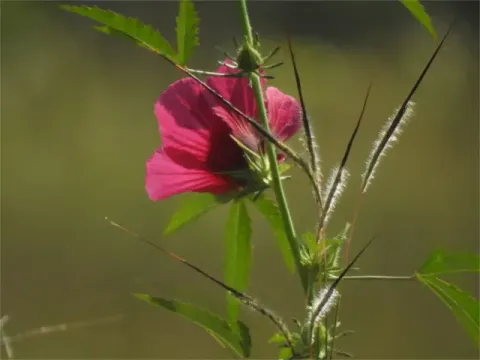
Hibiscus radiatus
Hibiscus radiatus
Hibiscus radiatus is a heat-loving annual plant that requires consistently warm temperatures for optimal development. Sowing should be delayed until soil temperatures have reached at least 18–20 degrees Celsius to ensure rapid and uniform germination across the field.
What the section contains
Hibiscus radiatus
In industrial settings, seed drilling is the preferred method to maintain consistent plant density. Proper spacing is essential to prevent excessive branching, which is critical for maximizing the length and quality of the bast fibers produced from the main stems.
Seed quality and pre-sowing treatment are key success factors. Soaking seeds in growth-promoting solutions can significantly improve emergence rates, particularly in regions where the growing season is constrained by climatic limitations.
Seeds should be planted at a depth of 2–3 centimeters. In lighter soil types, ensuring the seed is placed in contact with moist soil is vital, as drying out at the germination stage can result in significant stand losses and reduced crop uniformity.
Adherence to a well-planned crop rotation strategy is mandatory for Hibiscus radiatus production. Cultivating this plant on the same plot repeatedly increases the risk of soil-borne diseases, making a break of at least three years between cycles necessary.
Belonging to the Malvaceae family, Hibiscus radiatus thrives in tropical conditions. It performs best in fertile, well-draining loamy soils. Excessive moisture, which leads to waterlogging, must be avoided to prevent root system decay and poor plant vigor.
Light intensity is a primary determinant of biomass accumulation. As a photophilic species, the crop requires full sun exposure throughout the entire vegetation period. Any degree of shading will negatively impact both fiber yield and plant height.
Maintaining adequate soil moisture is essential for producing high-quality fiber. While the plant shows some tolerance to temporary moisture deficits, the use of supplemental irrigation during dry spells is recommended to prevent stem hardening.
Nutrient management focuses on nitrogen availability during the vegetative growth phase. Balanced fertilization is necessary to support rapid stem elongation, which is the primary economic objective for producers focusing on fiber production.
Soil aeration is critical for maintaining healthy root development. Regular inter-row cultivation helps in both suppressing competing weeds and improving the physical structure of the soil, ensuring that the roots have sufficient access to oxygen.
The primary agricultural output of Hibiscus radiatus is its durable bast fiber, which is comparable to jute or kenaf. The fiber yield is strongly influenced by harvest timing, specifically targeting the technical maturity phase before lignification peaks.
Economic profitability is driven by the total volume of high-quality fiber produced per hectare. Optimized agricultural practices can lead to significant yields, making it a viable alternative for textile and bio-based material industries.
Secondary outputs, such as woody stem remnants (shiv or hurds), are becoming increasingly valuable. These materials are utilized in the manufacturing of particle boards and as high-quality organic mulch, contributing to the overall circular economy of the crop.
Harvesting strategies should prioritize the preservation of fiber integrity. Mechanical harvest equipment must be adjusted to cut the stems cleanly, allowing for effective processing and extraction of the fiber layers from the core.
Total yield also includes potential seed production for subsequent planting cycles. Integrating seed harvesting into the production process requires careful management to ensure that fiber quality is not compromised for the sake of seed maturation.
The crop faces several pest challenges, most notably cotton bollworms and aphids, which can severely damage the foliage and apical growth points. Implementing an integrated pest management plan is essential for maintaining crop health.
Fungal diseases, including Fusarium wilt, are a major risk, especially in high-humidity or poorly drained environments. Proactive field monitoring and the use of resistant varieties, if available, are the best defenses against these widespread pathogens.
Bacterial blight can also manifest in dense, humid stands, potentially spreading rapidly across a plantation. Management practices such as improving airflow between rows and removing symptomatic plants early can help mitigate the spread.
Weed competition is most critical in the first four weeks after emergence. During this window, the crop is highly susceptible to suppression by fast-growing weeds, necessitating timely mechanical weeding or targeted herbicide application to clear the canopy.
Effective crop management requires constant vigilance. By combining preventative agronomic measures with precise chemical and biological controls, growers can minimize losses and ensure a consistent supply of high-grade fiber for industrial applications.