
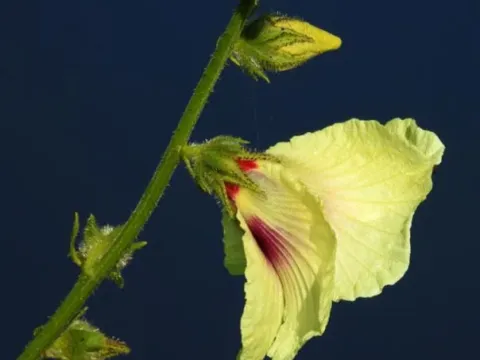
Swamp hibiscus
Hibiscus diversifolius
Swamp hibiscus (Hibiscus diversifolius) is a member of the Malvaceae family. It is a perennial herbaceous or subshrub plant often treated as an annual crop in agricultural systems due to its rapid biomass production.
What the section contains
Swamp hibiscus
Sowing in open field conditions should occur when soil temperatures have stabilized at or above 18°C. Planting too early in cold soil often leads to seed rot and uneven germination patterns across the field.
For commercial production, precision seeding is recommended to ensure uniform plant spacing. If using transplants, seedlings should be hardened off for a week before being moved into the field to reduce transplant shock.
The seeds are typically sown at a depth of 2 to 3 cm. Pre-soaking seeds in warm water for 24 hours can significantly speed up germination, especially in cooler regions where soil heat is a limiting factor.
Row spacing depends on the primary use of the crop. For fiber or biomass production, closer spacing is used to promote vertical growth and suppress weed development by shading the ground early in the season.
Hibiscus diversifolius thrives in full sun exposure. While it is naturally found in wetlands, it requires well-drained but moist soils to achieve maximum growth potential without the risk of root suffocation.
The species prefers loamy or sandy-loam soils with high organic matter content. Regular fertilization with nitrogen is essential during the vegetative phase to support the rapid development of stems and foliage.
Water requirements are significant. Consistent soil moisture must be maintained, especially during hot, dry spells, to prevent the plant from shedding leaves prematurely and slowing down the metabolic rate.
The plant grows best in temperatures ranging between 20°C and 30°C. Extreme temperature fluctuations, particularly late spring frosts, can severely damage the tender growing tips of young plants.
Weed control is critical during the first month after germination. Because the initial growth of seedlings can be slow, mechanical cultivation between rows is necessary to prevent competition for nutrients.
Common pests include aphids and whiteflies, which tend to congregate on the undersides of leaves and at the growing points. These pests not only weaken the plant but can also vector viral diseases.
Fungal issues, such as root rot and leaf spot, are prevalent in areas with poor airflow and high humidity. Ensuring proper spacing and keeping foliage dry whenever possible helps mitigate these risks.
Spider mites are another significant threat, particularly in dry and dusty conditions. Monitoring for webbing or speckled leaf appearance is essential for timely intervention.
Crop rotation is the most effective cultural practice to reduce soil-borne disease pressure. It is strongly advised not to plant Hibiscus diversifolius on land previously used for other malvaceous crops.
Integrated pest management (IPM) protocols should be established to utilize beneficial insects, such as ladybirds and lacewings, which naturally prey on the aphids that plague this crop.