
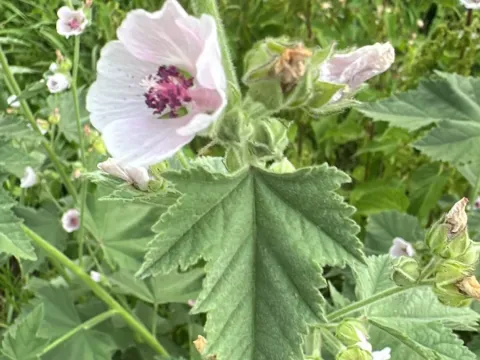
Taurian marsh-mallow
Althaea taurinensis
Sowing of Althaea taurinensis is typically performed in early spring as soon as the soil warms up to about 10 degrees Celsius. In regions with milder climates, late autumn sowing is possible to ensure early and uniform germination during the following spring.
What the section contains
Taurian marsh-mallow
The seeds of this plant feature a dense, protective coat, which necessitates scarification for improved germination rates. Seeds should be planted at a depth of approximately 1 to 2 centimeters in light, well-draining soil to support healthy seedling emergence.
A row spacing of 45–60 centimeters is recommended for large-scale production. This spacing ensures adequate light penetration and proper ventilation, which is crucial for reducing the risk of fungal diseases during the crop's development phase.
For those utilizing the seedling method, seeds can be started in greenhouses in March. Once the plants have developed two to three true leaves and the threat of frost has passed, they can be transplanted into the open field.
Maintaining optimal plant density is essential for maximizing yield. Excessive crowding should be avoided, as it inhibits root development and creates a microclimate favorable for pathogens within the plant canopy.
Althaea taurinensis, a member of the Malvaceae family, is a perennial herb characterized by a robust taproot system. It thrives in open, sun-drenched locations, as direct sunlight is vital for the synthesis of its biologically active compounds.
While the plant is adaptable to various soil types, it performs best in fertile chernozems or loamy soils with a neutral to slightly alkaline pH. Proper soil drainage is critical, as stagnant water is detrimental to root health and overall growth.
Although the crop shows reasonable drought tolerance due to its deep root structure, regular irrigation during the leaf rosette development phase is necessary for high-quality production. Consistent moisture levels directly correlate with the size and quality of the roots.
The plant is highly frost-hardy and well-adapted to the climatic conditions of temperate steppe zones. In areas prone to harsh, snowless winters, light mulching around the base can provide necessary protection for the dormant root buds.
The primary economic value of this crop lies in its pharmaceutical use. The roots are rich in mucilaginous substances, pectins, and starches, making them highly sought after for the production of respiratory medicines and anti-inflammatory supplements.
Leaf rust, caused by fungi of the genus Puccinia, is the most common threat to this culture. It manifests as reddish-brown spots on the leaves and can spread rapidly under warm, humid weather conditions.
Powdery mildew is another prevalent issue that affects the vegetative mass mid-summer. Maintaining a strict crop rotation and keeping the fields free of weeds are the most effective preventative measures against these pathogens.
Among pests, larvae of various weevils and aphids represent the most significant threat. These insects feed on tender leaves and developing buds, which can severely weaken the plant and reduce the harvest volume.
Pest control should be managed through integrated programs, prioritizing eco-friendly methods and limiting the use of chemical pesticides. This is particularly important for medicinal crops intended for further pharmaceutical processing.
Regular field inspections throughout the growing season are essential for early detection of potential outbreaks. Rapid identification allows for targeted interventions, minimizing damage to the plant stands and ensuring consistent product quality.
The harvest of Althaea taurinensis roots is generally conducted in the autumn of the second year of growth. At this stage, the plant's aerial parts begin to senescence, and the concentration of active medicinal components in the roots peaks.
Mechanical harvesting is preferred for large plantations using equipment specifically designed to lift root crops. Once harvested, the roots must be promptly cleaned of soil and separated from the stem bases and any damaged tissue.
After initial washing, the roots are sliced into manageable sections. Larger roots may need to be sliced lengthwise to ensure uniform drying and prevent mold or bacterial contamination during the dehydration process.
Drying is carried out in controlled thermal chambers at temperatures ranging from 45 to 50 degrees Celsius. Careful temperature management is required to preserve the chemical integrity of the mucilaginous contents and prevent discoloration.
Once dried to the correct moisture content, the product must be stored in a cool, dry, and well-ventilated environment. Using moisture-permeable storage bags helps maintain the quality and shelf-life of the raw materials for future processing.