
Grewia sapida
Grewia sapida
Grewia sapida is a deciduous shrub belonging to the Malvaceae family. It is native to the regions of South and Southeast Asia, with a natural distribution extending across the Himalayan foothills and neighboring territories.
What the section contains
Grewia sapida
The crop thrives in tropical and subtropical climates characterized by seasonal rainfall patterns. It demonstrates a notable level of drought tolerance, which makes it a resilient plant for cultivation in environments with limited water access.
Cultivation requirements involve well-drained, sandy or loamy soils. The species is highly sensitive to waterlogged conditions, making it essential to choose planting sites with excellent natural drainage to prevent root decay.
Optimal growth is achieved in locations with full sun exposure, although young shrubs may tolerate partial shade during their early development stages. Good air circulation is vital for maintaining the health of the plant.
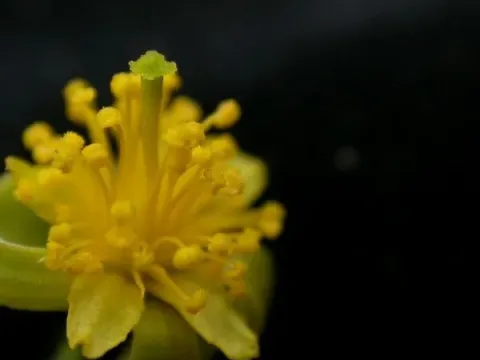
Botanically, the species is identified by its alternate leaf arrangement and small flowers that develop into edible drupes. When ripe, these berries typically turn a deep purple or near-black color, possessing a pleasant flavor profile.
The agricultural use of Grewia sapida is primarily focused on the harvest of its fruit. The berries are consumed fresh or processed into beverages, jellies, and jams due to their unique acidic-sweet taste and nutritional value.
Beyond food consumption, the plant has significance in traditional medicinal practices within its native range. Furthermore, the fibrous bark of various Grewia species is often studied for potential use in cordage and craft production.
Harvesting should be conducted as soon as the berries reach full maturity and display their characteristic dark color. Mechanical damage must be avoided during the process to ensure the longevity of the harvest quality.
Given the perishable nature of the fresh fruit, it is recommended to process or store them under cool conditions immediately after collection. Traditional preservation methods include sun-drying the fruit for extended storage.