
Grewia optiva
Grewia optiva
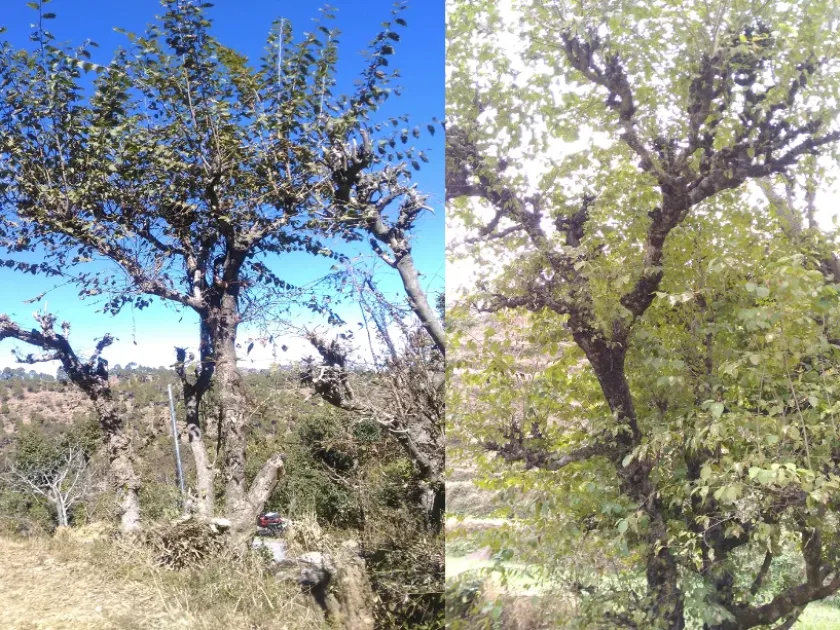
Description
Sowing dates
Propagation of Grewia optiva is primarily achieved through seeds, which require scarification to improve germination rates. The ideal time for sowing is at the beginning of the rainy season when soil moisture is optimal for early development.
Seeds are sown in prepared nursery beds or containers at a depth of 1-2 centimeters. Providing a consistent temperature is crucial for uniform germination, as seedlings are sensitive to harsh weather fluctuations during their first weeks.
In wild environments, natural regeneration occurs through self-seeding; however, controlled cultivation requires seedlings raised in nurseries. Transplanting to the permanent site is usually performed when the plants are one year old and have a well-developed root system.
Planting spacing depends on the primary goal: higher density for fiber production or wider spacing for fodder biomass. A standard recommended distance between rows is approximately 2 to 3 meters.
Proper irrigation during the first months after planting is essential for establishment. Young trees must be protected from intense sunlight and strong winds during the adaptation phase to ensure survival.
Growing requirements
Grewia optiva is a deciduous tree or large shrub belonging to the Malvaceae family, native to the Himalayan foothills. It is well-adapted to subtropical climates characterized by distinct wet and dry seasons.
The crop thrives in well-drained loamy or sandy-loam soils with a neutral to slightly acidic pH. Waterlogging is detrimental to the plant, making sloping sites the most favorable for cultivation.
It is a sun-loving species, although it can tolerate light shade during the juvenile stage. The plant is moderately frost-tolerant, but prolonged sub-zero temperatures can lead to dieback of younger, tender branches.
For successful growth, the species requires an annual rainfall between 800 and 1500 mm. During severe drought, mature trees can survive due to their deep root system, although productivity is significantly reduced.
Agricultural management includes regular weeding and soil cultivation around the base of the trees. Organic fertilization applied in early spring stimulates biomass growth, which is critical for foliage production.
Yield
The primary agricultural value of Grewia optiva lies in its high-quality bast fiber, harvested from the bark of young shoots. Fiber yield is directly proportional to the age of the tree and the frequency of pruning.
The leaves of Grewia optiva are a vital source of fodder, particularly in winter when fresh green forage is scarce. The nutritional quality of the foliage is often compared to high-grade legume hay.
Annual green biomass yield per hectare can reach several tons under optimal management conditions. Performance depends heavily on plant density and the intensity of the harvesting regime.
The fruits of the tree also serve a purpose, primarily as a natural food source for local wildlife, contributing to the balance of the ecosystem within agroforestry systems.
Economic efficiency is achieved through the tree's versatility, providing the farmer with fiber for ropes and textiles, nutritious livestock feed, and fuelwood from regular maintenance pruning.
Main diseases and pests
Grewia optiva is generally hardy, yet it can be affected by various leaf-eating insects. During periods of high humidity, outbreaks of larvae can cause significant damage to the foliage canopy.
Fungal diseases, such as powdery mildew, may occur in overcrowded plantations with poor airflow. Regular sanitary pruning is recommended to improve ventilation and prevent the spread of infections.
Root rot represents a serious threat in waterlogged conditions or heavy clay soils. Installing adequate drainage to divert excess rainwater is a vital preventive measure for long-term tree health.
Biological pest control methods, such as using natural predators or safe botanical extracts, are preferred over synthetic chemicals, especially since the leaves are used as animal feed.
Improper pruning techniques can create entry points for pathogens. Cuts should be clean and smooth to prevent water accumulation and subsequent wood decay, necessitating the use of sharp, sterilized tools.
Harvesting
Harvesting bark for fiber is best conducted during the active growth season when the sap is flowing, making the bark easier to separate from the woody core. The end of the rainy season is generally optimal.
Fodder collection involves careful branch pruning. This practice not only provides immediate feed for livestock but also encourages the tree to produce more vigorous shoots in the following season.
For industrial use, harvested branches are soaked in water for several days. This retting process softens the tissue, allowing for the extraction of strong, durable fibers from the bark.
After extraction, the fibers are washed and dried in the shade. High-quality processed fiber is prized for its strength and elasticity, making it ideal for the production of ropes and cordage.
Harvesting requires skill to avoid damaging the main trunk, which could weaken or kill the tree. It is essential to leave enough healthy branches to ensure the tree continues to photosynthesize and develop.