
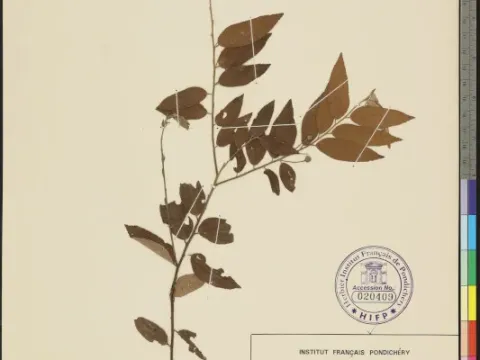
Grewia rothii
Grewia rothii
Grewia rothii is a woody perennial shrub belonging to the Malvaceae family, adapted to tropical climates and widely recognized for its versatile agricultural utility.
What the section contains
Grewia rothii
The sowing process typically commences at the onset of the rainy season to ensure optimal soil moisture levels, which are critical for uniform seed germination.
Seed preparation is a vital step; mechanical or chemical scarification is often employed to overcome seed coat dormancy and maximize successful sprouting rates.
Seedlings are ideally raised in nurseries, where they are protected from extreme weather until they develop a robust root system and reach a height of approximately 30-40 cm.
Transplanting into the permanent field should be handled with care to prevent root disturbance, ensuring the plants establish themselves efficiently in the new environment.
This crop thrives in tropical and subtropical zones, preferring areas with high ambient temperatures and distinct wet and dry seasonal patterns.
The plant requires deep, fertile, and well-drained loamy soils, as it is highly susceptible to root damage in waterlogged or heavy, compacted soil types.
While Grewia rothii displays a degree of drought tolerance once established, consistent irrigation during the peak growth phase is necessary for maximizing biomass.
Full sun exposure is essential for the development of healthy foliage and the production of high-quality fiber, as shading can lead to stunted growth.
The crop is sensitive to freezing temperatures, making it unsuitable for cultivation in regions with cold winters unless managed in a controlled greenhouse environment.
The primary economic value of Grewia rothii is its bast fiber, which is harvested from young stems and used for cordage, traditional weaving, and various crafts.
Effective yield management relies on dense planting schemes combined with frequent pruning to encourage the development of long, straight, fiber-rich shoots.
The foliage of the plant serves as a valuable forage resource for livestock, providing supplemental nutrition in regions where fresh pasture is scarce during dry seasons.
Pharmacological research has also highlighted the potential of the plant's parts, suggesting additional value for the development of natural extracts.
Sustainable plantation management allows for multi-year harvesting cycles, providing a reliable annual income for farmers through consistent production of raw materials.
Common agricultural pests include aphids and mealybugs, which tend to congregate on young, tender shoots and cause damage by sucking plant sap.
Fungal infections, particularly root rot caused by Fusarium species, can become prevalent in poorly drained soils or during periods of excessive rainfall.
Stem borers pose a significant threat to the quality of the harvest by compromising the structural integrity of the stems, rendering the fiber weak and brittle.
Integrated pest management, including the use of neem-based oils and natural predators, is the recommended strategy for maintaining a healthy and productive crop.
Preventative cultural practices, such as maintaining proper plant spacing and effective weed control, are fundamental to minimizing the risk of outbreaks.
Harvesting involves the selective cutting of annual stems, which are chosen based on their thickness and maturity to ensure the highest grade of fiber.
The harvested stems are subjected to a retting process, where they are submerged in water to facilitate the separation of fiber bundles from the woody core.
After the fibers are extracted, they undergo thorough cleaning to remove impurities and are then air-dried in a shaded area to maintain their structural properties.
Timing is crucial, as harvesting too early results in underdeveloped fibers, while delaying the process can lead to increased lignin content and reduced flexibility.
The final dried fiber product is sorted according to quality, baled, and stored in dry conditions to protect it from moisture and degradation before reaching the market.