
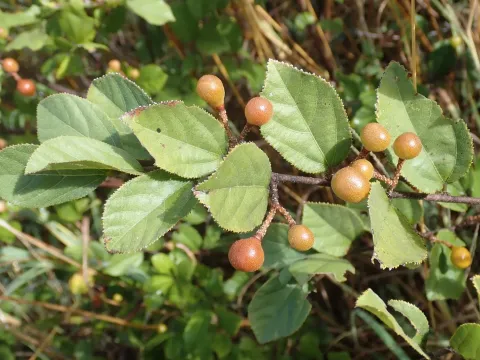
Grewia retinervis
Grewia retinervis
Grewia retinervis is a perennial shrub or small tree belonging to the Malvaceae family. In its natural habitat, the plant propagates primarily through seeds dispersed by animals that feed on its fruits, facilitating seed germination across the savannah landscapes.
What the section contains
Grewia retinervis
For cultivation, seeds require scarification or stratification to improve germination rates due to their hard seed coats. The ideal sowing period coincides with the beginning of the rainy season, which provides the necessary moisture for the seeds to germinate and establish their root systems.
Planting involves placing seedlings in warm, well-prepared soil with adequate spacing. Since the species is highly drought-tolerant, young plants require minimal maintenance, although regular watering during the first few months is critical for establishing strong roots.
This crop shows high adaptability to various soil types, including poor, sandy substrates, making it a promising candidate for agroforestry. Stem cuttings may also be used for propagation, though this method requires careful moisture control and the use of rooting hormones.
Planting density depends on the intended use; for fruit production, a wider spacing is recommended to maximize sunlight exposure. In its natural environment, the plant demonstrates excellent regenerative abilities, recovering quickly from pruning or browsing damage.
Grewia retinervis is perfectly adapted to arid and semi-arid zones, thriving in the savannahs and woodlands of Africa. It requires significant sunlight and is well-suited to the high daytime temperatures characteristic of tropical climates.
The plant is not demanding regarding soil quality, preferring well-drained grounds. Its ability to survive on rocky and sandy terrain is attributed to a deep-reaching root system that allows it to access moisture from lower soil layers during the dry season.
The minimum rainfall required for successful growth is approximately 300-500 mm annually. While mature specimens are extremely resistant to drought, severe water deficits can negatively impact flowering intensity and fruit set.
The optimal soil pH range is from slightly acidic to neutral. The plant does not tolerate waterlogging, so it is essential to select elevated or well-drained planting sites to prevent root rot and other moisture-related diseases.
When cultivating, it is important to note that the tree is sensitive to cold temperatures. Frost can cause severe damage to young shoots, limiting commercial cultivation to tropical and subtropical regions where temperatures remain consistently above freezing.
The primary agricultural product is the edible fruit, small drupes valued by local communities for their pleasant, sweet taste. Yields vary significantly depending on the plant's age, moisture availability, and the success of insect pollination.
The fruits are often consumed fresh or processed into drinks, jams, and traditional fermented products. Due to their high sugar content, they serve as a valuable source of nutrition during seasonal food shortages in rural areas.
Grewia wood is known for its strength and flexibility, making it useful for crafting small tools, handles, and household utensils. This multi-purpose utility makes the crop a vital resource for communities practicing traditional land management.
The leaves and young branches serve as an important fodder source for livestock, particularly during the dry season when grasses become scarce. This dual-purpose utility enhances the plant's value for farmers working in the arid zones of Africa.
Some species of Grewia have historically been used for their bark fibers, which are processed into ropes or coarse textiles. While commercial-scale industrial use is limited, this traditional application remains significant in local craft and basketry industries.
The plant possesses high natural resistance to many diseases due to its secondary metabolites, which act as deterrents against various pathogens. Major epiphytotics in natural populations are rare, which is a major advantage for organic farming systems.
Primary pests include various phytophagous insects that feed on the foliage. Most commonly, these are lepidopteran larvae which, in cases of mass outbreak, can partially defoliate the crown; however, the damage is rarely lethal to established trees.
Fruit damage may be caused by birds or rodents, sometimes leading to significant yield losses before harvest. To protect plantations, farmers often employ basic mechanical barriers or bird-scaring techniques to preserve the crop.
Fungal root diseases can develop if agricultural practices are flawed—specifically, through over-irrigation or planting in heavy, clayey soils that promote water retention. Providing adequate soil aeration is the primary preventive measure.
Specific parasitic plants, such as mistletoe, may settle on Grewia branches, drawing nutrients from the host. Regular sanitary pruning is an effective and necessary practice to maintain the health and vigor of the crop throughout the tree's lifespan.
Harvesting is performed manually as the fruits reach maturity, usually falling in the latter half of the rainy season or the beginning of the dry period. A change in skin color to a specific ripe shade and a slight softening are key indicators for harvest.
The process is labor-intensive because the fruits are small and distributed throughout the crown. In managed plantations, canopy pruning is often used to restrict tree height, facilitating easier access to the fruits during the harvest window.
Once harvested, fruits should be processed or consumed quickly due to their short shelf life. In many local settings, the fruits are sun-dried, a preservation method that allows the crop's nutritional value to be maintained for an extended period.
For harvesting wood or fodder, selective pruning is applied, which simultaneously serves as a crown-shaping operation. It is crucial to perform pruning during the dormancy period to minimize stress on the tree and ensure faster healing of the cuts.
Bark intended for craft purposes is gathered from young branches. Sustainable harvesting practices involve stripping fibers from only a portion of the shoots, ensuring the tree remains viable and capable of continued fruit production.