
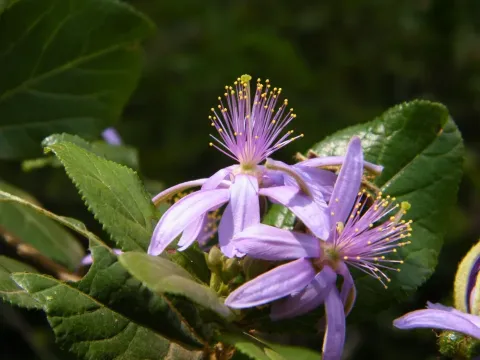
Grewia similis
Grewia similis
Grewia similis, belonging to the Malvaceae family, is a resilient shrub or small tree commonly found in the tropical regions of Eastern and Southern Africa. Botanically, it is recognized for its flexible branches and ability to thrive in diverse environments, ranging from open savannas to forest edges. It typically reaches a mature height of 2 to 5 meters.
What the section contains
Grewia similis
This species is highly adapted to sunny and dry climates, making it an excellent candidate for cultivation in arid or semi-arid conditions. It prefers well-drained soils, ideally with a neutral pH, though it shows significant plasticity regarding soil composition. Proper sunlight exposure is crucial, as shading significantly reduces both growth rates and fruit production.
Agricultural practices for Grewia similis include systematic pruning, which is essential to manage the shrub's architecture and improve harvest efficiency. Fertilization strategies should focus on balanced NPK ratios, especially during the pre-flowering stage, to ensure strong development of the reproductive buds and healthy shoot elongation.
The water requirements are moderate; while the plant is drought-tolerant, supplemental irrigation is recommended during the flowering and fruit-setting phases to maintain high yields. Mulching the root zone helps retain moisture and prevents the growth of competitive weeds that could deplete essential soil nutrients.
The economic utility of Grewia similis is diverse, spanning from food production to craft materials. The fruits are consumed locally as a sweet snack and are increasingly processed into jams and traditional beverages. Furthermore, the strong fibers harvested from the bark are highly valued in the production of durable ropes, cords, and traditional artisanal items.
Common pests affecting Grewia similis include various species of aphids and scale insects that cluster on the underside of leaves. Integrated pest management, focusing on biological controls, is the preferred method for maintaining plant health in orchards.
Fungal issues, such as leaf spot, may arise if the plant is subjected to poor air circulation or prolonged high humidity. Proper site selection and periodic thinning of the canopy are effective strategies to prevent the onset and spread of these infections.