
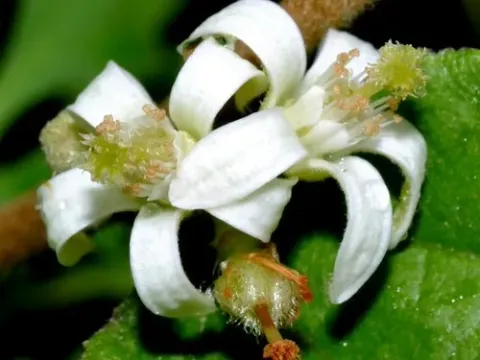
Grewia retusifolia
Grewia retusifolia
Grewia retusifolia is a perennial shrub belonging to the Malvaceae family. Native to tropical northern Australia, this species is well-adapted to environments characterized by long periods of high temperatures and seasonal drought conditions.
What the section contains
Grewia retusifolia
The plant thrives in well-drained, sandy, or rocky soil types. Proper soil aeration is essential for the root system, as the plant is highly susceptible to root rot if waterlogged conditions persist for extended periods during the rainy season.
Regarding light requirements, Grewia retusifolia is a heliophilic plant, requiring full sun exposure to flourish and produce high yields. In managed environments, it is crucial to ensure that surrounding vegetation does not shade the shrub, as this can severely impact its vigor.
Climatic requirements involve constant warm temperatures; the shrub is frost-sensitive and cannot survive in regions with freezing winters. It is an excellent candidate for xeriscaping in arid climates due to its remarkable ability to endure prolonged water scarcity.
Maintenance involves occasional pruning to encourage a bushy, compact habit and to remove dead or diseased branches. Fertilization should be kept to a minimum, primarily using slow-release organic inputs during the start of the active growing season.
The plant is relatively resistant to major agricultural pests; however, like other Malvaceae, it can occasionally be affected by sap-sucking insects such as aphids or scale insects. Early detection through regular monitoring is the most effective management strategy.
Fungal diseases related to excessive humidity are the primary threats. If the plant is kept in poor ventilation or overly damp conditions, leaf spots or powdery mildew may develop, necessitating immediate pruning of affected areas and improved airflow.
Weed management around the base of the plant is vital during the early establishment phase to prevent competition for limited soil nutrients. The use of organic mulch helps suppress weed growth while maintaining necessary soil moisture levels.
Although it possesses strong natural defenses, the shrub may attract certain local fauna that consume the fruits. In commercial cultivation, protective netting might be necessary if the goal is to harvest a significant quantity of fruit for processing.
Sustainable agricultural practices dictate that chemical pesticides should be avoided, as the plant is often part of an ecosystem that supports local pollinators and beneficial insects. Integrated pest management (IPM) is the recommended approach for this culture.
The harvest of Grewia retusifolia primarily focuses on its edible fruits, often referred to as Emu berries. These small drupes are typically harvested by hand when they reach full maturity, indicated by a dark, glossy skin and soft texture.
For medicinal use, the bark and roots are harvested according to traditional practices. It is crucial to perform these harvests in a manner that ensures the long-term survival of the plant, usually by taking only small portions from various parts of the root system.
Post-harvest handling of the fruit is delicate due to its short shelf life. If not consumed immediately, the fruits should be kept in cool, dry conditions or processed into preserves to maintain their nutritional profile and antioxidant content.
Dried leaves or roots intended for botanical preparations must be processed in a clean, dust-free environment with good air circulation. Proper storage in airtight containers will prevent moisture regain and ensure the longevity of the active medicinal compounds.
As interest in native Australian foods grows, the professional harvest and commercialization of Grewia retusifolia continue to offer economic opportunities for farmers looking for drought-tolerant crops that require minimal chemical inputs.