
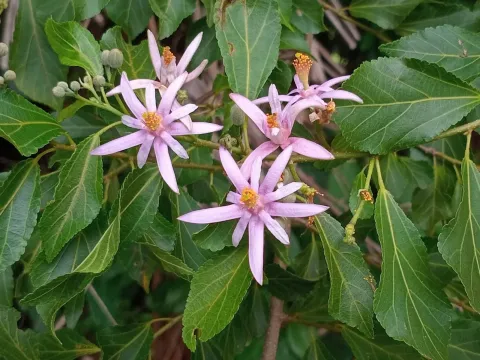
Grewia occidentalis
Grewia occidentalis
Grewia occidentalis, commonly known as crossberry, is typically propagated from seeds or semi-hardwood cuttings. Seeds require pre-sowing treatment, such as scarification, to break dormancy and ensure uniform germination.
What the section contains
Grewia occidentalis
The ideal time for sowing is during the spring season when temperatures are consistently warm. Seeds should be sown in a well-draining, nutrient-rich potting medium and kept in a bright location, avoiding direct harsh sunlight until they establish.
Cuttings should be taken from mature, healthy stems during late summer. Dipping the base in rooting hormone powder before planting them in a humid, sterile substrate significantly improves the success rate of propagation.
Young seedlings should be kept in a controlled environment until they are robust enough for transplantation. Gradual acclimatization to outside conditions is crucial to prevent transplant shock during the transition to the open garden.
Maintenance of high humidity around cuttings is essential, as the plants require adequate moisture to develop a strong root system. Once roots are established, the frequency of watering can be gradually reduced.
Belonging to the Malvaceae family, Grewia occidentalis is an evergreen shrub native to Southern Africa. It is prized for its ornamental value, characterized by its deep purple-pink star-shaped flowers that appear throughout the summer months.
This species thrives in sunny, sheltered locations and prefers well-drained, loamy soils. While it exhibits some drought tolerance once fully established, consistent moisture is necessary during the initial growing stages to promote dense foliage.
As a warm-climate plant, it does not tolerate hard frosts. In cooler regions, it is best grown in containers, allowing for easy relocation to a greenhouse or conservatory during the winter months to protect it from extreme temperatures.
Regular pruning is an essential part of the care routine for Grewia occidentalis. Cutting back the branches after flowering encourages the plant to maintain a bushy shape and stimulates the production of new flowering wood for the following season.
Fertilization with a balanced, slow-release plant food during the active growth period ensures the shrub remains vigorous and healthy. It also enhances the vibrancy of the foliage and the overall flower count.
Common pests that can affect Grewia occidentalis include aphids, whiteflies, and spider mites. These are particularly troublesome when the plant is kept in dry, indoor environments with poor air circulation.
Overwatering is the primary cause of root rot in this species. Ensuring the soil has excellent drainage and allowing the surface to dry out slightly between watering cycles is the most effective way to prevent fungal infections.
Powdery mildew can occasionally appear on the leaves if the plants are crowded together. Ensuring adequate spacing between shrubs and providing good airflow are key preventative measures against this fungal issue.
Integrated pest management, including the use of neem oil or insecticidal soaps, is effective for controlling minor infestations. It is important to treat the undersides of the leaves, where pests typically gather.
Monitoring the plant regularly for signs of yellowing or stunted growth allows for early intervention, preventing potential issues from escalating into significant problems that could affect the shrub's health.
The primary use of Grewia occidentalis is in ornamental gardening, where it serves as a stunning focal point or a component of mixed hedges. Its unique fruit, which resembles a small, four-lobed star, adds late-season interest.
In its native range, the fruit is edible and serves as a vital food source for local bird species. This makes it an excellent choice for gardeners looking to attract local wildlife and promote biodiversity in their landscape.
The wood of the plant is noted for being strong and flexible, and traditionally, it has been used for crafting walking sticks and various domestic tools. However, its commercial use remains minimal outside of niche craft applications.
When grown in containers, the plant serves as a versatile accent piece for patios and terraces. Its ability to tolerate pruning makes it suitable for trained shapes or espalier, depending on the gardener's preference.
Collecting seeds is straightforward once the fruit has fully ripened and dried on the branch. Properly stored, the seeds remain viable for several years, allowing for reliable future propagation of the species.