
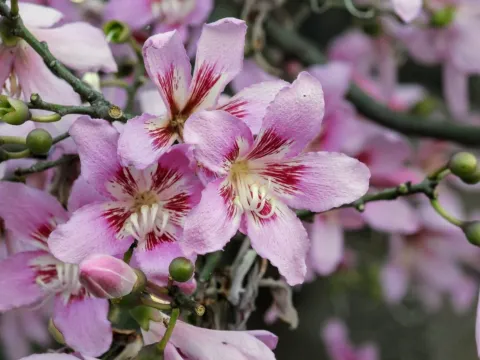
Ceiba pubiflora
Ceiba pubiflora
Ceiba pubiflora is a member of the Malvaceae family, recognized as a significant tropical tree species native to the South American rainforest ecosystems.
What the section contains
Ceiba pubiflora
The species demands a tropical climate characterized by consistently high temperatures and adequate rainfall distribution throughout the year.
Optimal soil conditions include deep, nutrient-rich, and well-drained loamy soils that prevent the risk of waterlogging in the root zone.
The tree requires significant exposure to full sunlight to sustain its rapid growth rate and ensure proper development of its wide canopy.
Agricultural management must account for the substantial size of the tree, necessitating wide planting distances to minimize intraspecific competition.
Ceiba pubiflora is primarily cultivated for its lightweight timber, which is highly valued for furniture manufacturing and specialty wood crafting.
The tree produces seed pods containing silky fibers, commonly known as kapok, which serve as a natural filling material for high-end textiles.
Economic yields are typically calculated based on the volume of timber produced per hectare over a standard harvesting rotation cycle.
Manual harvesting techniques are generally employed during the dry season to ensure the fiber quality is maintained before the onset of rain.
Beyond commercial use, the species plays a vital role in reforestation efforts by acting as a pioneer species that stabilizes soil structures.
The species faces pressure from various wood-boring beetles that can compromise the structural integrity of the main trunk during the growth phase.
Fungal infections, particularly root rot, can occur if the soil is poorly drained or if the tree experiences prolonged moisture stress.
Leaf-feeding insects may affect photosynthetic output, especially in young plantation stages, potentially leading to slower overall maturation.
Preventative care, including balanced pruning and site selection, is essential for maintaining a healthy stand of Ceiba pubiflora.
Regular monitoring programs are recommended to identify early signs of infestation and prevent large-scale impact on the timber quality.