
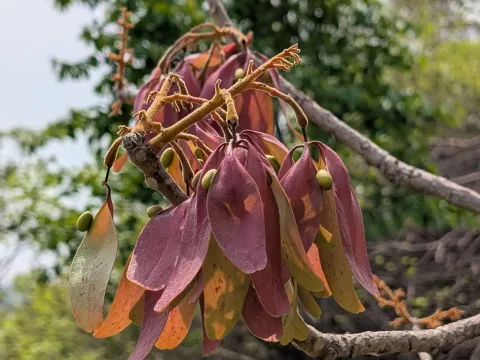
Chinese parasol tree
Firmiana Marsili
Propagation of the Chinese parasol tree is primarily achieved through seeds. Before sowing, seeds require stratification at temperatures between 2 and 5 degrees Celsius for about eight weeks.
What the section contains
Chinese parasol tree
The sowing substrate should be well-drained and lightweight, preferably a mix of peat and perlite or coarse sand to ensure optimal moisture regulation.
Seeds should be sown at a depth of approximately 2-3 centimeters. A warm environment with temperatures around 20-25 degrees Celsius is essential for successful germination.
Germination usually takes several weeks. It is crucial to keep the soil consistently moist but not waterlogged to prevent the seeds from rotting before they sprout.
Once the seedlings develop their first true leaves, they should be transplanted into individual pots, ensuring careful handling of the delicate taproot system.
Firmiana simplex is a deciduous tree belonging to the Malvaceae family. It is native to Eastern Asia and is widely valued for its large, tropical-looking leaves.
This species thrives in full sun but requires protection from strong winds, especially in its juvenile stage when the wood is still relatively flexible and prone to breakage.
The tree prefers deep, fertile, and slightly acidic to neutral soils. Good drainage is the most critical factor, as stagnant water is detrimental to its health.
While the tree shows some drought tolerance once established, regular irrigation during the first few growing seasons significantly promotes faster growth and better crown development.
In temperate zones, it is often grown in containers or protected areas because the wood can be damaged by severe frost if the trees are not properly acclimatized.
Common pests associated with this tree include scale insects and aphids, which are particularly problematic during periods of prolonged drought or heat stress.
Monitoring the undersides of the leaves is essential for early detection of pest infestations, allowing for prompt treatment with horticultural oils or insecticides.
Root rot caused by Phytophthora or other fungi is a major threat in poorly drained or overly dense soil conditions, leading to rapid decline of the canopy.
Maintaining proper airflow within the canopy through selective pruning helps minimize the risk of fungal infections and improves the overall vigor of the tree.
Integrated pest management strategies are recommended, focusing on maintaining soil health and providing adequate nutrition to help the tree resist potential pathogens.