
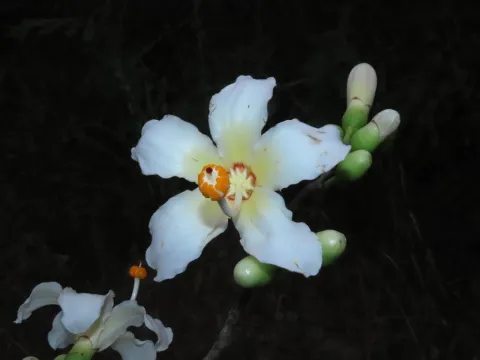
Ceiba insignis
Ceiba insignis
The propagation of Ceiba insignis is primarily achieved through seeds, which should be planted in a well-draining, nutrient-rich potting medium to ensure rapid germination.
What the section contains
Ceiba insignis
Optimal germination occurs at temperatures between 22 and 26 degrees Celsius. Providing bottom heat can significantly increase the percentage of successful sprouts.
Seed depth should be approximately one centimeter. After sowing, the container should be covered with clear plastic to maintain high humidity until the seedlings emerge.
Once the seedlings develop two sets of true leaves, they should be carefully transplanted into larger individual pots to prevent root crowding and encourage faster development.
Hardening off the young trees before permanent planting is a crucial step to ensure the plants can withstand the intensity of direct outdoor sun exposure.
As a member of the Malvaceae family, Ceiba insignis is prized for its impressive structure, featuring a unique, often spiny trunk that serves as a water reservoir.
Full sun exposure is a non-negotiable requirement for this species. Without adequate light, the tree will become leggy and fail to reach its full flowering potential.
Soil should be deep, fertile, and slightly acidic to neutral. Ensuring excellent drainage is critical, as Ceiba insignis is highly intolerant of waterlogged soil conditions.
While mature trees are somewhat drought-tolerant, young specimens require consistent moisture to establish their root systems during the first few years of growth.
The tree thrives in tropical and subtropical climates and has very low frost tolerance. Protection from freezing temperatures is essential for its survival in cooler zones.
In ornamental landscaping, harvesting generally refers to the maintenance of the tree, including the strategic pruning of dead or crossing branches to maintain symmetry.
The tree produces large fruit capsules. While the seed fluff (kapok) is technically harvestable, it is primarily left as a natural feature of the tree's landscape.
When collecting seeds for further propagation, wait until the fruit capsule opens naturally on the branch to ensure the seeds have reached full maturity.
The light wood of the tree is sometimes harvested in forestry contexts, though it is much less common than its use in urban arboriculture and decorative planting.
Proper management of the tree's surroundings, such as cleaning up leaf litter, is a vital part of the harvest maintenance cycle to reduce fire and pest risks.
Spider mites are the most common pest, especially in dry and hot conditions. They cause leaf discoloration and can significantly stress young specimens.
Scale insects can also infest the stems. If detected early, these can be managed by manual removal or the application of horticultural oils during the dormant season.
Root rot is the most serious disease risk. It is almost always a result of overwatering or inadequate soil aeration, leading to the rapid decline of the plant.
Fungal leaf spot diseases may appear during periods of high humidity. Improving air circulation around the canopy is the most effective preventative measure.
Regular monitoring of the bark is essential to detect any mechanical damage, which can serve as an entry point for wood-boring insects and opportunistic pathogens.