
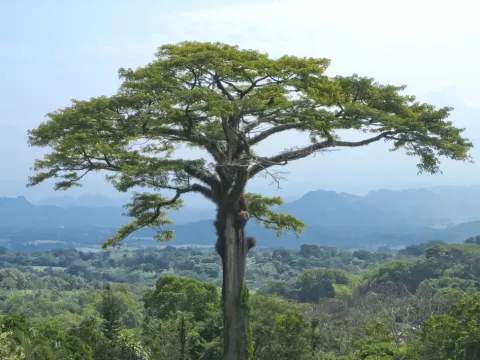
Ceiba
Ceiba
Propagation of Ceiba in commercial settings is primarily achieved through seeds. Sowing should occur immediately after harvest to ensure high germination rates, as the seeds lose viability quickly during storage.
What the section contains

Ceiba
To improve germination uniformity, seeds are often soaked in warm water before planting. The optimal sowing time aligns with the onset of the rainy season to provide sufficient moisture for initial growth.
Seedlings are maintained in nurseries until they reach a height of 30–50 centimeters. Once robust, they are transplanted into the field, maintaining wide spacing to ensure each tree receives optimal sunlight.
Vegetative propagation via cuttings is also utilized to preserve specific desirable traits of mother plants. This method requires strict humidity control to ensure rooting success in the young cuttings.
The preparation of planting pits filled with nutrient-rich organic matter is essential for establishing strong root systems in the first years. Proper soil preparation significantly increases the establishment rate of the plantation.
Ceiba is a member of the Malvaceae family, adapted to the warm and humid conditions of tropical rainforests. The tree requires consistently high temperatures throughout the growing cycle to thrive.
The crop prefers deep, well-draining alluvial soils with a neutral pH. Waterlogging is detrimental, as the root system is highly sensitive to hypoxia and susceptible to decay in stagnant water conditions.
As a light-demanding species, Ceiba requires open spaces to achieve full development. Inadequate light levels can lead to stunted growth and lower quality fiber production within the seed pods.
The tree is extremely frost-sensitive and cannot survive outside tropical or subtropical climatic zones. In areas with prolonged dry seasons, supplemental irrigation is necessary to support vegetative growth.
While adaptable to various soil textures, the presence of organic matter and deep soil structure is required for high productivity. Good agricultural practice involves regular soil aeration and weeding around the base.
The primary commercial product of the Ceiba tree is kapok, a lightweight, silky fiber produced in the seed pods. An individual tree can produce several kilograms of fiber annually once it reaches maturity.
Significant yields typically begin around the fifth to seventh year of the tree's life. Peak production is usually observed in mature trees between 15 and 30 years of age, provided they are managed correctly.
The quality of the fiber is highly dependent on timely harvesting. If the pods are left on the branch too long, they may burst, leading to fiber contamination and loss due to wind and rain.
Seeds also possess commercial value, containing oil that can be extracted for industrial applications. This makes the Ceiba tree a dual-purpose crop, offering both textile fiber and oilseed potential.
Optimizing the density of trees and providing proper canopy management ensures consistent yield levels. Modern farming focuses on reducing labor costs through efficient harvesting techniques.
The most significant threat to Ceiba plantations is fungal root rot, which typically stems from poor drainage. Proactive water management is the best defense against these pathogenic issues.
Insect pests, such as leaf-eating caterpillars and weevils, can cause significant damage to foliage and pod development. Integrated pest management strategies are preferred to maintain tree health.
Aphid infestations can weaken young trees and serve as vectors for viral infections. Regular field monitoring is necessary to detect outbreaks early before they spread across the entire plantation.
Because the trees grow to impressive heights, chemical pest control can be difficult. Therefore, maintaining high levels of hygiene and tree vigor is the primary approach for disease prevention.
Young trees are vulnerable to sunscald on their trunks, which can create entry points for secondary infections. Applying protective trunk coatings or using mulch helps safeguard young specimens.
Harvesting the Ceiba crop is a delicate process, traditionally performed by hand. The pods must be picked when they turn from green to brown but before they undergo natural dehiscence.
Post-harvest, the pods are dried under direct sunlight. This drying process causes the pods to split open, allowing the workers to extract the kapok fiber and seeds easily.
Proper drying is critical to prevent the growth of mold or fungi within the fiber. Once dried, the fiber should be stored in ventilated areas to maintain its buoyancy and softness.
Mechanical decorticators are used to separate the silky fiber from the seeds and pod residue. This stage is vital for creating a high-quality, clean product suitable for industrial export.
Processed kapok is packed into compressed bales for transport. Compliance with international quality standards regarding moisture content and cleanliness is essential for market acceptance.