
Tapinanthus iturensis
Tapinanthus iturensis
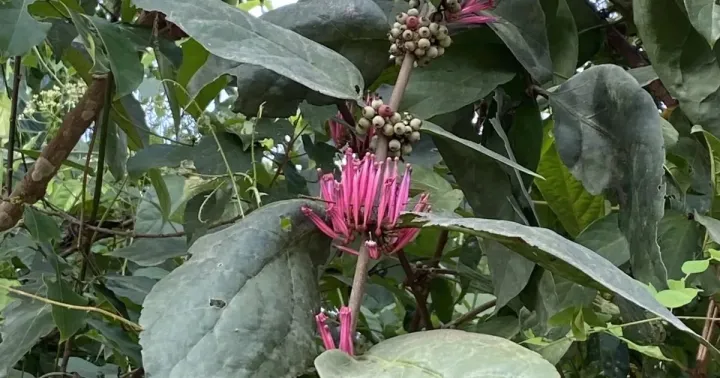
Description
Growing requirements
Tapinanthus iturensis is a notable member of the Loranthaceae family, characterized as a semi-parasitic shrub. It thrives as an epiphyte, attaching itself to the branches of various host trees to extract essential water and nutrients.
The plant originates from the tropical rainforests of the Ituri region in the Democratic Republic of the Congo. Its distribution is closely linked to the availability of suitable host trees and the presence of specific avian species that facilitate seed dispersal.
Botanically, it features succulent leaves and distinct, often brightly colored, tubular flowers. Its structural development is entirely dependent on the host tree's vascular system, as it lacks a traditional root system for soil interaction.
Climate requirements for this species include consistent tropical warmth and high relative humidity throughout the year. It does not possess specific soil requirements, as its nutritional intake is derived through haustorial penetration of the host's bark.
While not a conventional agricultural crop, it holds significance in local ecological systems and indigenous medicinal practices, where specific preparations are derived from its leaves and stems.
Main diseases and pests
Common threats to Tapinanthus iturensis include fungal infections that spread rapidly during periods of prolonged rainfall, affecting the integrity of the plant's stems.
Various insect pests, including stem borers and sap-sucking beetles, can significantly weaken the plant, reducing its ability to draw resources from the host.
Environmental degradation, particularly the loss of mature forest canopy and host tree biodiversity, remains the most critical threat to its long-term survival.
Competition with other parasitic epiphytes for space and light on host branches can lead to stunted growth and reduced reproductive success.
Changes in avian populations, which are the primary vectors for seed dispersal, directly influence the ability of the plant to colonize new host individuals.