
Tapinanthus blantyreanus
Tapinanthus blantyreanus
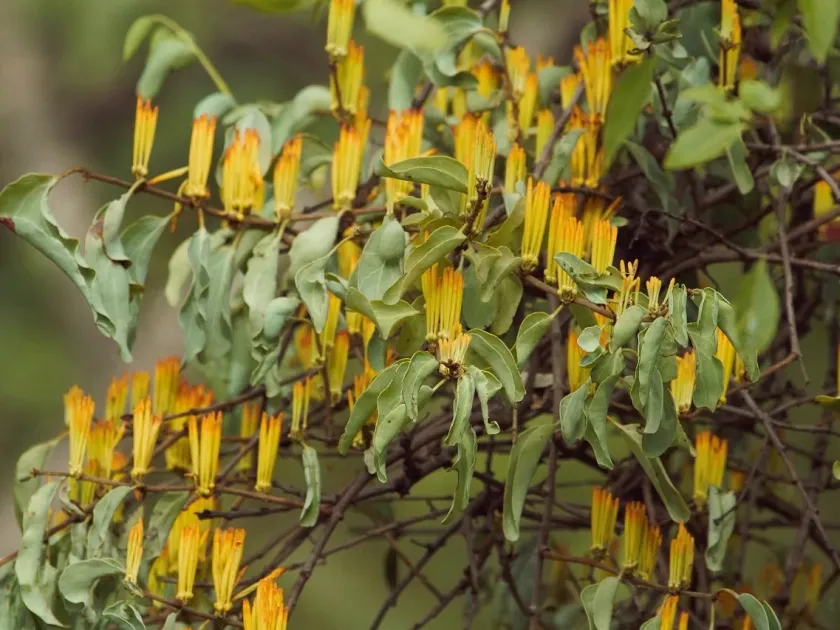
Description
Growing requirements
Tapinanthus blantyreanus is a notable member of the Loranthaceae family, characterized by its hemiparasitic nature in tropical environments.
The plant survives by attaching itself to the branches of host trees using haustoria, which allow it to extract water and nutrients directly from the xylem.
Its natural distribution is primarily centered in the tropical regions of Africa, where it thrives in canopy-rich forest ecosystems.
The survival of this species depends heavily on the presence of suitable host trees that can support the growth of the hemiparasitic shrub.
Climatic requirements involve stable tropical temperatures and specific humidity levels that favor the germination of the plant's seeds on bark surfaces.
Main diseases and pests
The primary threats to Tapinanthus blantyreanus involve the loss of host trees due to deforestation and significant habitat fragmentation.
Herbivorous insects pose a constant risk, often feeding on the succulent leaves and reducing the photosynthetic capacity of the parasite.
The host tree's defensive chemical response can sometimes successfully isolate and kill the haustoria, limiting the spread of the parasite.
Competition with other epiphyte and parasite species for space and nutrients on the branches of the host can lead to decline in individual vitality.
Pathogenic fungi affecting the host tree are a major threat, as the death of the host results in the immediate mortality of the dependent parasite.