
Tapinanthus bangwensis
Tapinanthus bangwensis
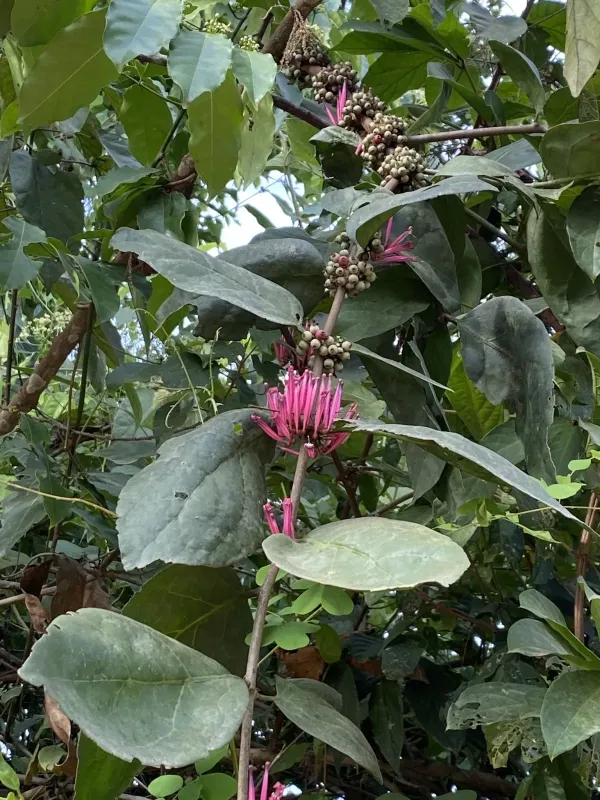
Description
Growing requirements
Tapinanthus bangwensis is a parasitic shrub belonging to the Loranthaceae family. While not an agricultural crop, it is a significant concern for tropical agriculture as it negatively impacts various tree species, including cash crops like cocoa and citrus.
The plant originates from the tropical regions of Africa. It thrives in humid environments, which are conducive to its growth and ability to colonize host trees. Its presence is often noted in agroforestry systems where diverse tree species provide suitable conditions for establishment.
Botanically, it functions as a hemiparasite, meaning it carries out photosynthesis but relies on the host tree for water and mineral nutrients. It attaches to the host branches using specialized haustoria, which penetrate the host's vascular system to extract necessary resources.
Environmental requirements for the spread of this species include high humidity and the presence of vector birds. Birds are essential for dispersing the sticky seeds, which adhere to branches and eventually germinate, starting the cycle of parasitism on a new host.
Agricultural management is focused on eradication. Since chemical control is difficult without harming the host, manual pruning and removal of the parasitic shrubs remain the most effective methods to maintain the productivity of affected plantations.
Main diseases and pests
The primary threat is the physiological stress placed on the host tree. Over time, the parasitic growth causes stunted development, reduced foliage, and significant drops in crop yields, which is economically damaging for farmers.
The invasion sites where haustoria enter the wood create physical weaknesses in branches. These entry points are frequently exploited by secondary pathogens, including wood-decay fungi, which can lead to branch breakage and overall tree decline.
There are no specific widespread pests that control Tapinanthus bangwensis populations effectively. The plant's ability to maintain high levels of moisture and nutrient acquisition makes it a robust competitor against its host tree.
Typical agricultural damages include the loss of structural integrity of the tree canopy. In severe cases, the parasitic infestation spreads so rapidly that the host tree dies, requiring replacement of entire sections of the orchard or plantation.
Integrated pest management strategies suggest that early detection is crucial. Regular monitoring of trees for the presence of the parasite, especially during the off-season, helps in preventing mass outbreaks that could lead to large-scale economic loss.